

The reported Flipkart Minutes The Last Delivery campaign raises an interesting question for quick-commerce marketing: can the wait between placing an order and receiving it become an opportunity for branded entertainment?
A reported campaign by Flipkart Minutes, titled The Last Delivery, explores this possibility through horror-themed entertainment. The concept has attracted attention because it connects content with a familiar part of online shopping: the wait between placing an order and receiving it. The strategic idea is worth examining, although the campaign’s specific execution and details should be confirmed through an official company-owned source before publication.
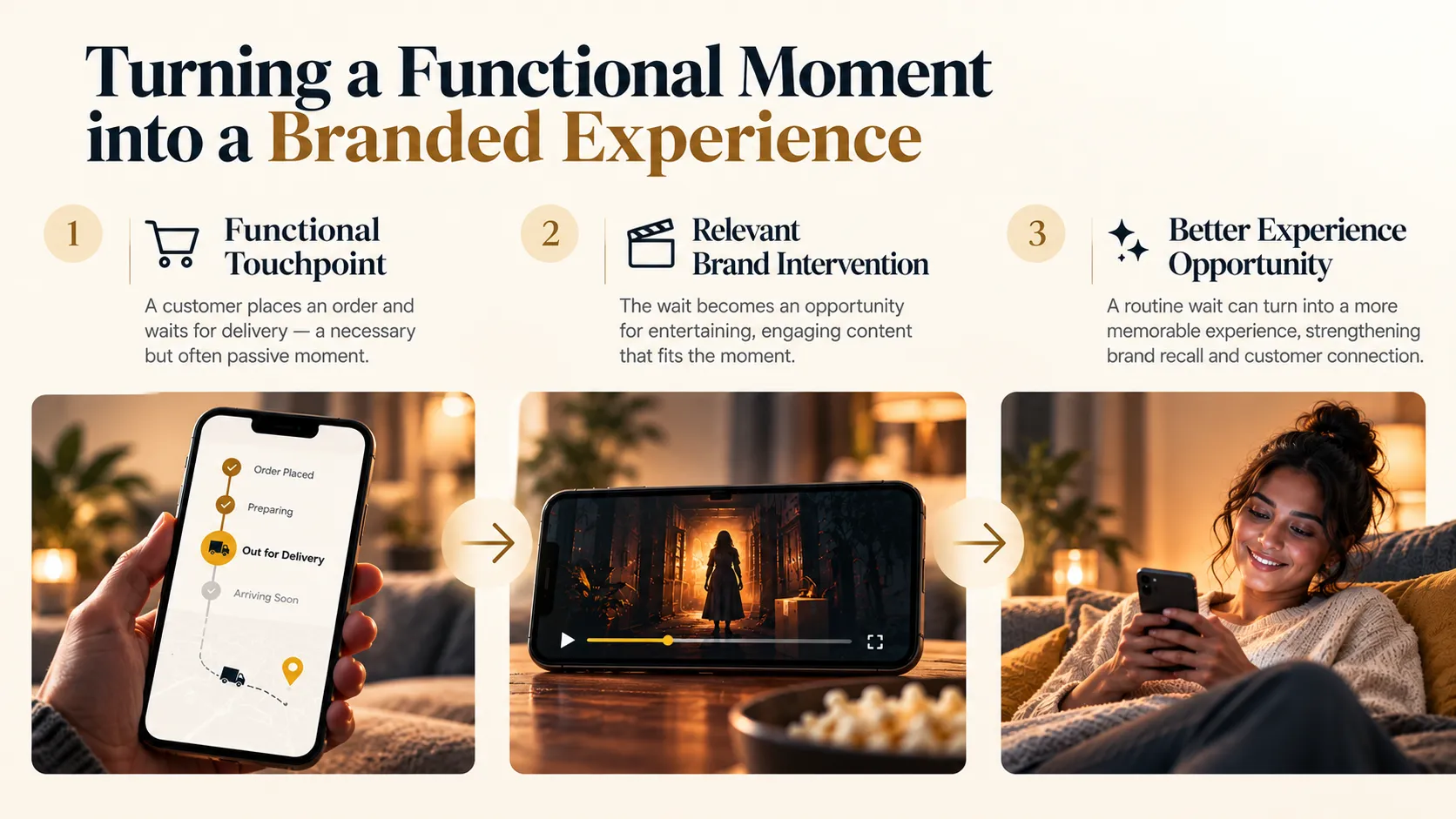
Flipkart Minutes The Last Delivery: Turning a Functional Moment into a Brand Experience
The idea also raises questions about commerce experiences built around entertainment and participation, rather than transactions alone.
Order tracking is primarily a utility. Customers open an app to check progress, understand when an order might arrive and decide whether they need to do anything else. The interaction is useful, but it is rarely designed to be memorable in its own right.
This creates an opportunity for brands to think beyond the transaction. Rather than treating every digital interaction as a step towards fulfilment, marketers can consider whether certain moments could offer additional value through relevant content, information or entertainment.
The important distinction is context. A piece of content placed within a customer journey should make sense for the moment in which it appears. Entertainment connected to a delivery wait has an understandable relationship with the experience. An unrelated message, by contrast, could add friction to a journey designed around convenience.
The broader marketing question is therefore not simply whether a brand can produce entertaining content. It is whether the content belongs in the experience the brand already provides.
Why Entertainment Needs to Fit the Occasion
Horror offers a recognisable creative language: suspense, anticipation and the feeling that something unexpected is about to happen. These qualities can make waiting itself part of the storytelling experience.
A Halloween-linked execution also gives the creative idea a cultural occasion around which to build relevance. However, seasonal timing alone does not make a campaign effective. The creative treatment still needs to fit the brand, the audience and the environment in which people encounter it.
For quick-commerce marketers, that balance matters. A platform associated with convenience has a different customer expectation from a streaming service or entertainment brand. Content can add personality, but it should not obscure essential information, make order tracking harder or create uncertainty about the delivery itself.
This is the strategic test for entertainment-led customer experiences: does the idea complement the service, or compete with it?
The Bigger Lesson: Find Value in the Journey
The potential lesson extends beyond one campaign. Customer journeys contain moments that brands often treat as operational necessities rather than opportunities to build relationships. A confirmation screen, a delivery update, an onboarding step or a post-purchase message can each serve a clear functional purpose while also shaping how a brand feels to its audience.
That does not mean every touchpoint needs a campaign. Sometimes the best experience is a fast, clear update with no additional content. In other situations, a relevant recommendation, useful explanation or optional entertainment feature may give customers a reason to engage more deeply.
The opportunity is to start with the customer’s context rather than the brand’s desire for attention. What is the person doing at this moment? What information or experience would genuinely help? Is there a natural connection between the brand and the proposed content?
This way of thinking also connects with the wider evolution of quick commerce in India, where the platform can be understood as more than a place to complete transactions. Its repeated customer interactions offer opportunities to learn what people need and where better experiences might be created.
This also connects with a broader view of quick commerce as a learning environment, where repeated customer interactions can reveal opportunities for better experiences.
What Marketers Should Take Away
There are four practical considerations for brands exploring this approach.
First, identify a real customer moment. Begin with an existing behaviour or need, not an idea searching for a place to live.
Second, make the creative connection obvious. Customers should understand why the content belongs within the experience.
Third, protect the core service. Any additional layer must preserve clarity, usability and the brand’s primary promise.
For quick-commerce brands, the challenge is to build brand strength beyond the digital shelf without compromising the convenience customers expect.
Finally, measure more than attention. Views, clicks and completion rates can indicate engagement, but they do not independently establish business impact. Depending on the objective, marketers should also examine customer feedback, repeat usage, experience quality and whether the intervention creates friction.
Conclusion
The reported The Last Delivery concept raises a useful question for quick-commerce and digital-first brands: what if a moment traditionally treated as downtime could become part of the brand experience?
The answer will depend on execution and evidence, not novelty alone. Entertainment can help a functional interaction feel more distinctive when it is relevant, optional and consistent with the service. The larger opportunity is not to turn every customer touchpoint into content. It is to recognise which moments deserve a better experience—and design them around the customer.