

For years, marketers have been taught to think about digital advertising in familiar categories.
Search.
Social.
Video.
Display.
Retail media.
ChatGPT Ads in India now add another environment to that mix: AI conversations.
Now there is another environment entering the mix:
AI conversations.
ChatGPT Ads are now available in India, giving businesses another way to reach people inside an AI interface. OpenAI began rolling out advertising to logged-in adult users on its Free and Go plans in India in August, while its self-serve Ads Manager became available to Indian advertisers in September.
And the scale of the environment matters.
OpenAI said in February that India had more than 100 million weekly ChatGPT users.
That makes this more than an interesting technology experiment.
It starts to look like the emergence of a new media environment.
This Is Not Just Another Advertising Placement
The interesting part isn’t that ChatGPT now has ads.
Platforms have been selling ad space for decades.
The interesting part is where the ad appears.
A traditional digital ad interrupts a user’s browsing behaviour.
A search ad appears when someone enters a query.
A social ad appears while someone is consuming a feed.
ChatGPT is different because the user is already having a conversation about something they want to know, solve, compare or decide.
OpenAI describes ChatGPT as a place where people come with goals such as choosing software, planning a renovation, finding a job or exploring a hobby.
That creates an unusual advertising environment:
the platform understands the context of the question before the advertising opportunity appears.
That could make AI advertising strategically different from simply putting another banner into another digital channel.
India Is Becoming an Important Test Market
India isn’t a minor addition to the rollout.
OpenAI says the country has more than 100 million weekly ChatGPT users.
The Indian launch initially included more than 50 brands, with WPP and Omnicom named as OpenAI’s first agency partners in the market. OpenAI subsequently made its Ads Manager available in India for businesses.
The minimum daily budget reported around the Indian launch was ₹725, lowering the barrier for businesses that want to experiment with the channel.
That doesn’t mean every Indian business should immediately move budget into ChatGPT. This can be an effective strategy for any small businesses marketing strategy also.
It does mean marketers should start watching what happens here.
The Bigger Shift: From Search to Conversation
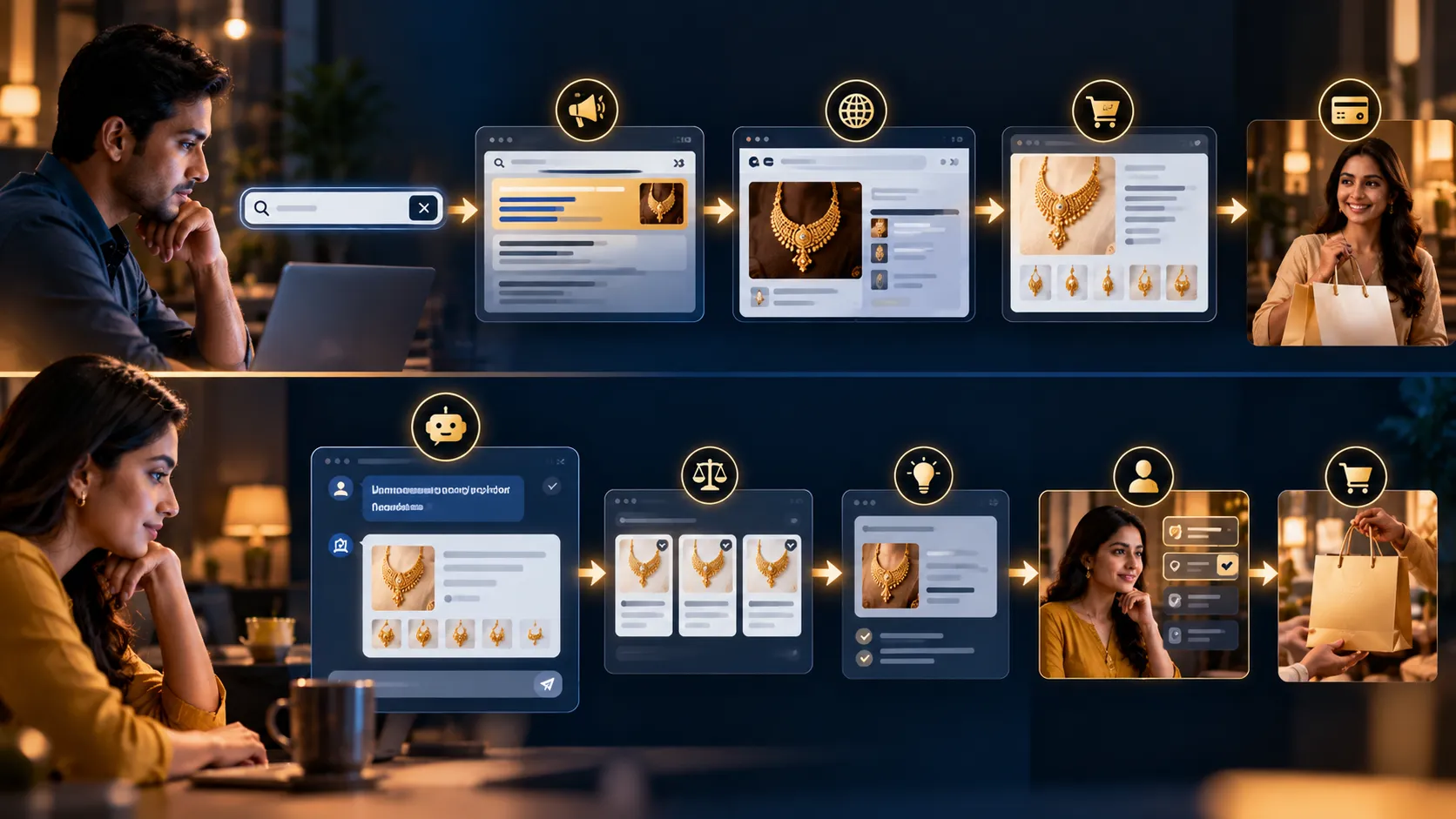
This is where the story becomes more interesting for marketing strategy.
Traditional search often begins with:
“What should I search for?”
AI search increasingly begins with:
“Help me figure this out.”
That is a different user behaviour.
A person might ask:
- Which laptop should I buy?
- Which software is best for my business?
- What should I use for this problem?
- Which brands should I compare?
- What should I consider before buying?
The interface isn’t simply returning ten blue links.
It is helping construct the answer.
And that creates a new question for marketers:
What happens when brand discovery increasingly happens inside an answer rather than a search-results page?
That is arguably more important than the ad unit itself.
ChatGPT Ads Are Not the Same as Being Recommended by ChatGPT
This distinction matters.
OpenAI says advertisements are clearly labelled and separate from ChatGPT’s answers, and that advertising does not influence the answers generated by the model.
So marketers should not confuse:
Paid visibility
with
Organic AI recommendation or citation.
They are different things.
A brand can potentially pay for an advertising placement while still needing to earn its organic visibility through its content, reputation, relevance and presence across the wider information ecosystem.
That makes the emerging AI marketing environment more complicated than simply:
“Put money into ChatGPT and ChatGPT will recommend you.”
It won’t.
And Now OpenAI Is Moving Beyond the Ad
The development becomes even more interesting when you look at what OpenAI announced in September.
OpenAI introduced Sponsored Agents, allowing users to start a conversation with a business-sponsored agent after clicking an advertisement.
It also announced AI-assisted ad creation tools and integrations with HubSpot and Shopify.
That points toward something bigger.
The future advertising journey may look less like:
See ad → click → website → browse → decide
and more like:
Ask → discover → compare → interact → decide → transact
If that develops at scale, advertising and commerce start moving closer together inside the same interface.
So Should Indian Brands Start Advertising on ChatGPT?
Not automatically.
This is where strategy matters more than novelty.
A new advertising channel is not valuable simply because it is new.
The better questions are:
Is our audience there?
Are they asking questions related to our category?
Can we identify meaningful decision moments?
Can we measure what happens after the interaction?
Does the channel add something that our existing media mix doesn’t?
For some categories, the opportunity could be significant.
For others, it may still be too early.
The right response isn’t “AI is the future, so move the budget.”
It is:
“Let’s understand what job this channel can actually perform.”
That is the same principle that should govern every media decision.
The Real Competition May Not Be for Ad Space
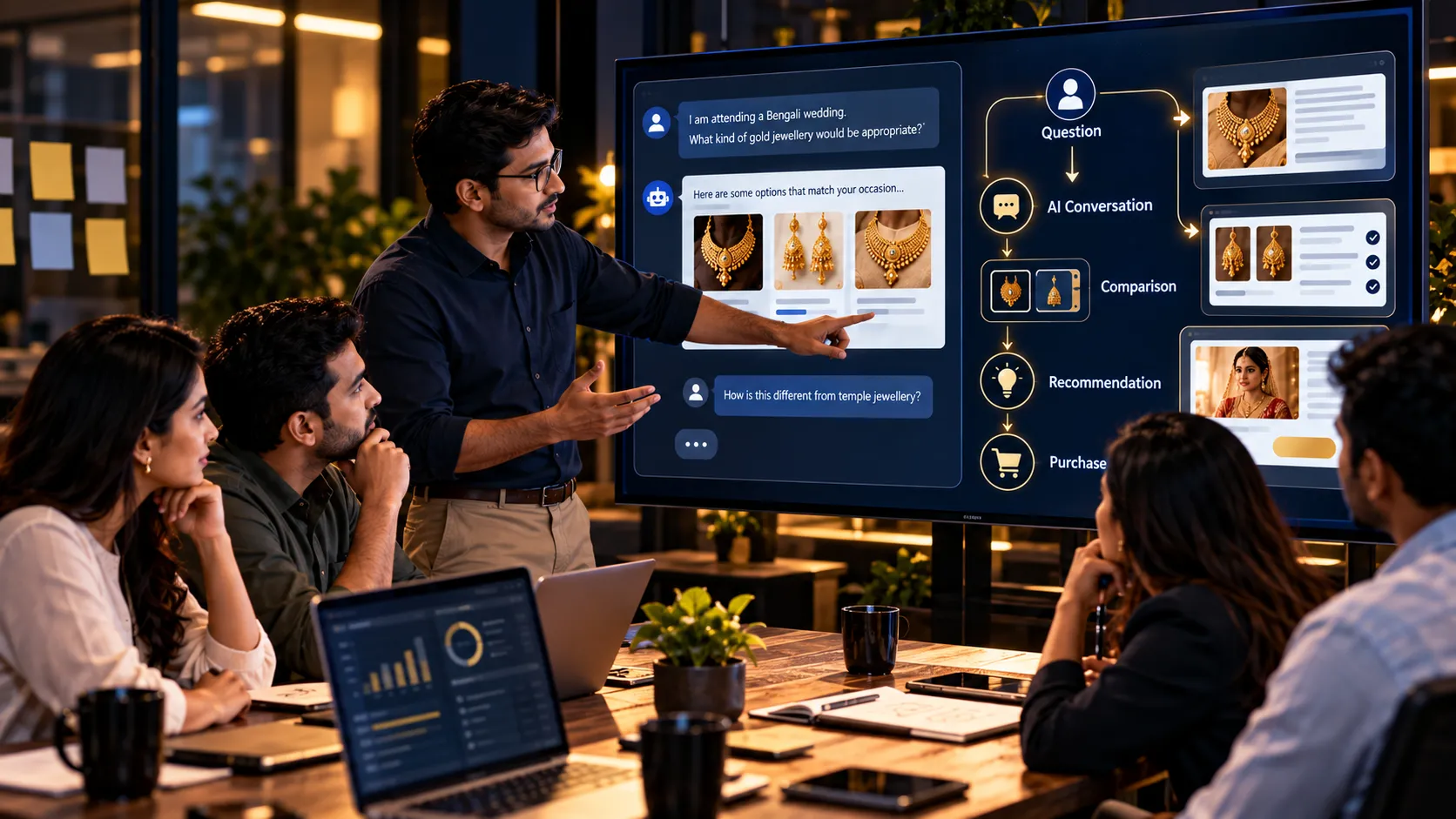
It may be for decision-space.
That’s the part marketers should pay attention to.
Google owns an enormous part of the search journey.
Meta owns a huge part of attention and discovery.
Amazon owns a powerful part of product search and commerce.
Now AI platforms are trying to occupy the space between:
question → recommendation → decision → action.
And ChatGPT is already operating at significant consumer scale in India.
So the strategic question isn’t simply:
“Should we advertise on ChatGPT?”
It is:
“What happens to our marketing when customers start making more decisions inside AI?”
That is a much bigger question.
What Indian Marketers Should Watch Next
The next few months should tell us more than the launch announcement itself.
Watch:
1. Which categories advertise first
Will early adoption concentrate around software, education, finance, D2C, travel, retail or other considered purchases?
2. What users actually respond to
Will AI advertising work better for discovery, comparison or conversion?
3. How brands measure it
The traditional click-through framework may not tell the whole story.
4. Whether AI-native creative develops
Advertising designed for a conversational environment may eventually look very different from conventional display or social creative.
5. Whether advertising and commerce converge
OpenAI’s Sponsored Agents and commerce integrations suggest this is already being explored.
The Marcom Trends Take
ChatGPT Ads are not important because “AI has ads now.”
They’re important because advertising is moving into an environment where people increasingly arrive with a question, problem or decision rather than simply a desire to consume content.
That changes the context in which brands compete for attention.
And it raises a bigger possibility:
The next important media channel may not be the place where people look at advertising.
It may be the place where they ask what to do next.
For Indian marketers, that’s worth watching closely.
FAQs:
Are ChatGPT Ads available in India?
Yes. OpenAI has made ChatGPT Ads available in India, with advertising shown to eligible logged-in adult users on the Free and Go plans. Ads Manager is also listed as available for advertisers in India.
How many people use ChatGPT in India?
OpenAI said in February 2026 that India had more than 100 million weekly ChatGPT users.
Do ChatGPT Ads influence ChatGPT’s answers?
OpenAI says advertisements do not influence the answers generated by ChatGPT and are displayed separately from responses.
Is ChatGPT another form of search advertising?
Not exactly. It has characteristics of search, conversational discovery and advertising, but the user experience is different because the interaction is conversational and can involve recommendation and decision-making.
Should every Indian brand advertise on ChatGPT?
No. The relevance depends on audience behaviour, category, decision journey, objectives and the role the channel can play within the wider media strategy.