

Running a business already pulls you in ten directions. Sales, operations, team issues, cash flow, customer follow-ups. Somewhere in that chaos, social media is supposed to happen regularly, creatively, and strategically.
That’s where most business owners struggle.
They know social media matters. They know consistency matters even more. But they don’t have the time, mental space, or system to plan content properly. The result is random posting, long gaps, or outsourcing without clarity.
Here’s what matters. Social media content planning is not about posting more. It’s about deciding once and executing calmly for weeks. When done right, it saves time, reduces stress, and actually supports business goals instead of becoming another unpaid job.
Let me break it down in a way that works for busy business owners, not full-time creators.
Why Social Media Content Planning Is Non-Negotiable Today
Social platforms are no longer just awareness channels. They influence trust, buying decisions, hiring, partnerships, and brand perception.
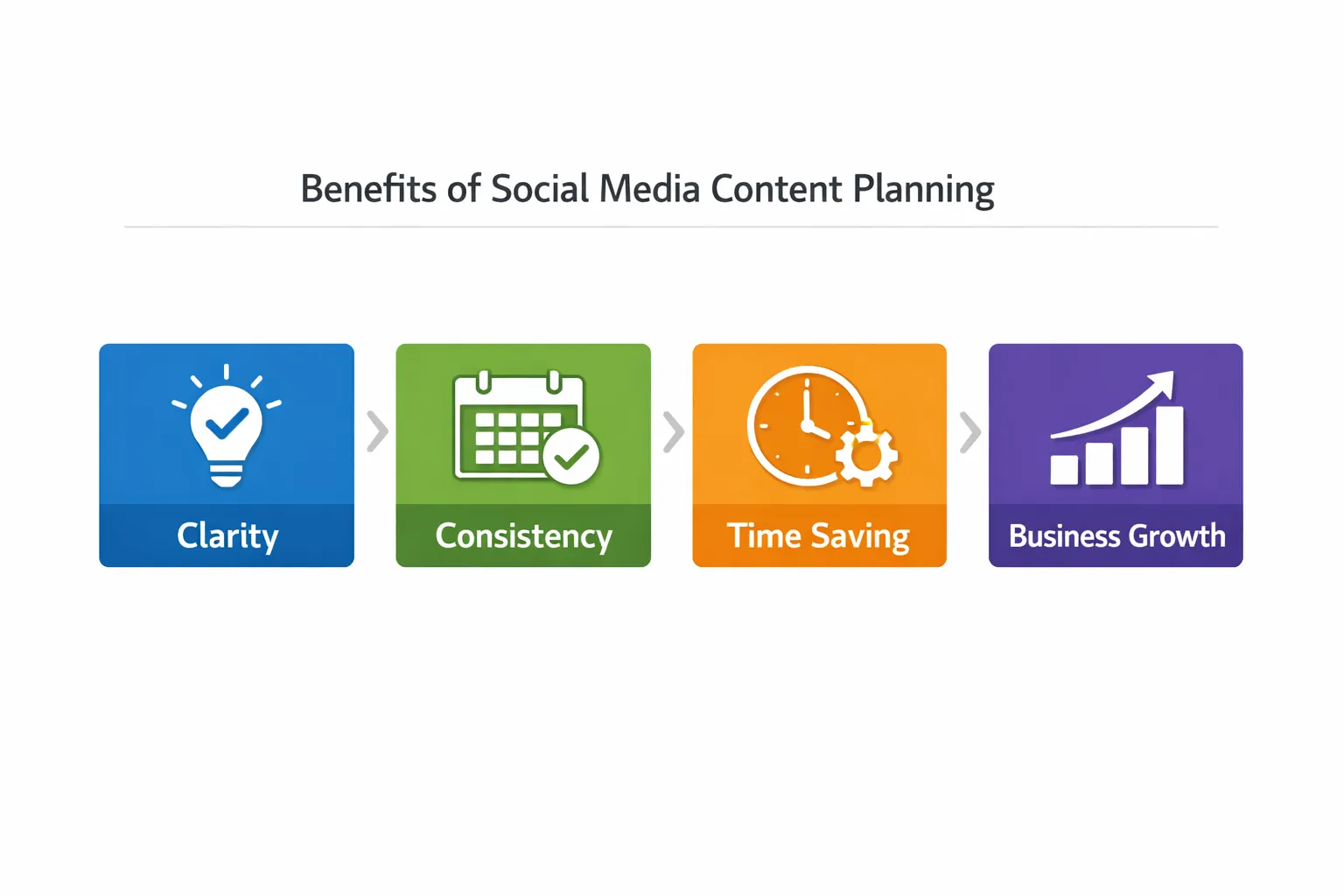
At the same time, algorithms now reward three things consistently:
- Clarity of niche
- Consistency of posting
- Depth over randomness
Posting whenever you feel like it no longer works. Neither does copying trends without context.
Content planning gives you:
- Control over your brand narrative
- Predictable visibility instead of spikes and drops
- Better ROI from the same time spent online
Most importantly, it removes daily decision fatigue. You stop asking, “What should I post today?” every morning.
The Real Challenges Busy Business Owners Face
Before jumping into solutions, let’s be honest about the constraints.

Time scarcity
You don’t have hours every day to think about captions, hooks, visuals, and hashtags.
Mental overload
Even if you have ideas, switching from business mode to content mode is exhausting.
Inconsistent output
You post actively for two weeks, then disappear for a month.
Lack of strategy
Posts go out, but they’re not aligned with sales cycles, launches, or brand positioning.
Good content planning isn’t about doing more work. It’s about designing a system that respects these realities.
Start With Business Goals, Not Platforms
Most people plan content platform-first. Instagram ideas. LinkedIn posts. YouTube topics.
That’s backwards.
Start with your business goals for the next 90 days.
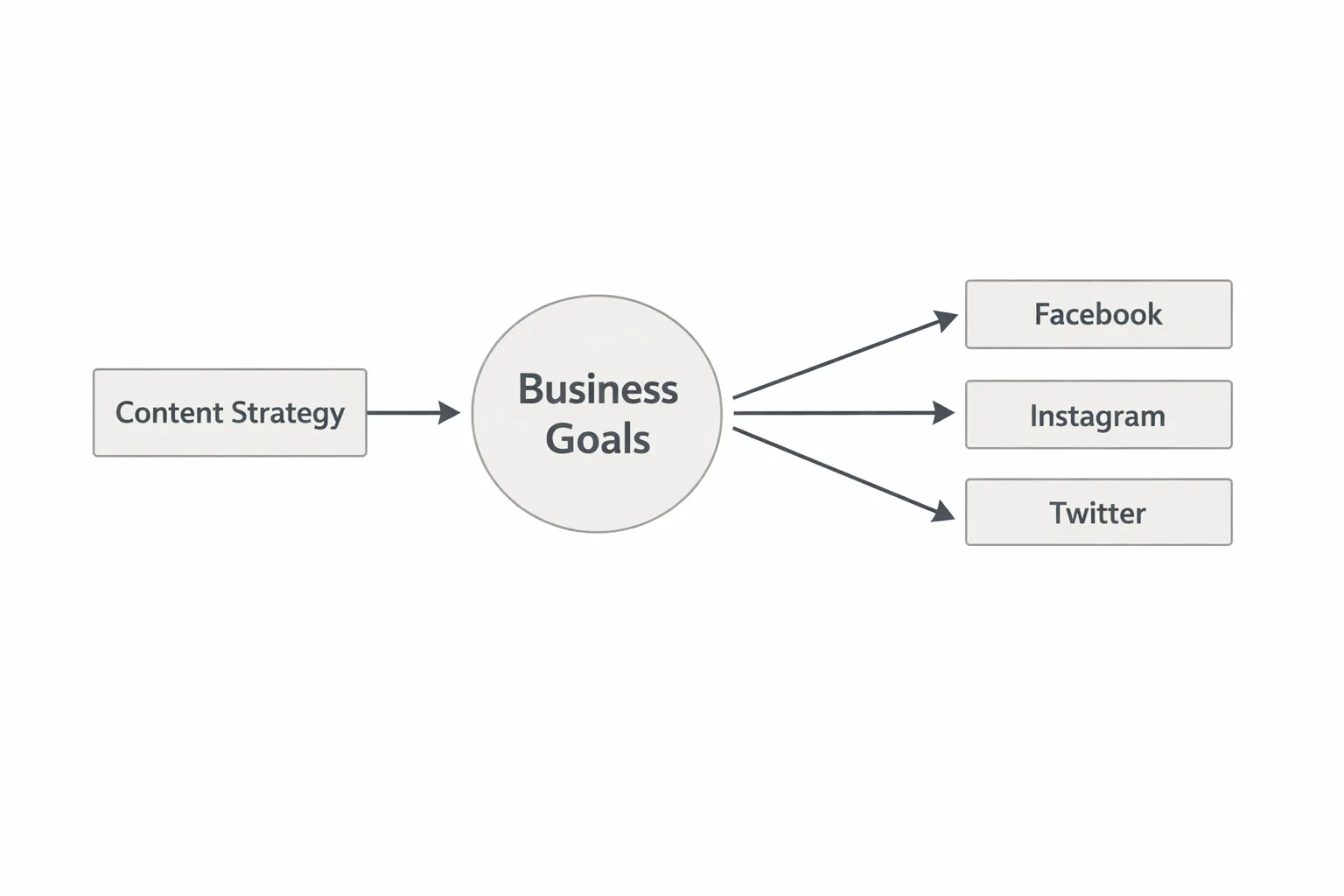
Ask yourself:
- Do I want more leads?
- Do I want authority in my niche?
- Do I want to educate prospects before sales calls?
- Do I want to attract talent or partners?
Your goal decides your content mix.
For example:
- Lead-focused goals need problem-aware and solution-aware content
- Authority goals need insights, frameworks, and point-of-view posts
- Trust-building goals need stories, behind-the-scenes, and case examples
Once this is clear, platforms become distribution channels, not the starting point.
Define 3–4 Core Content Pillars Only
Busy owners don’t need 10 content categories. They need focus.
Content pillars are recurring themes you talk about repeatedly, from different angles.
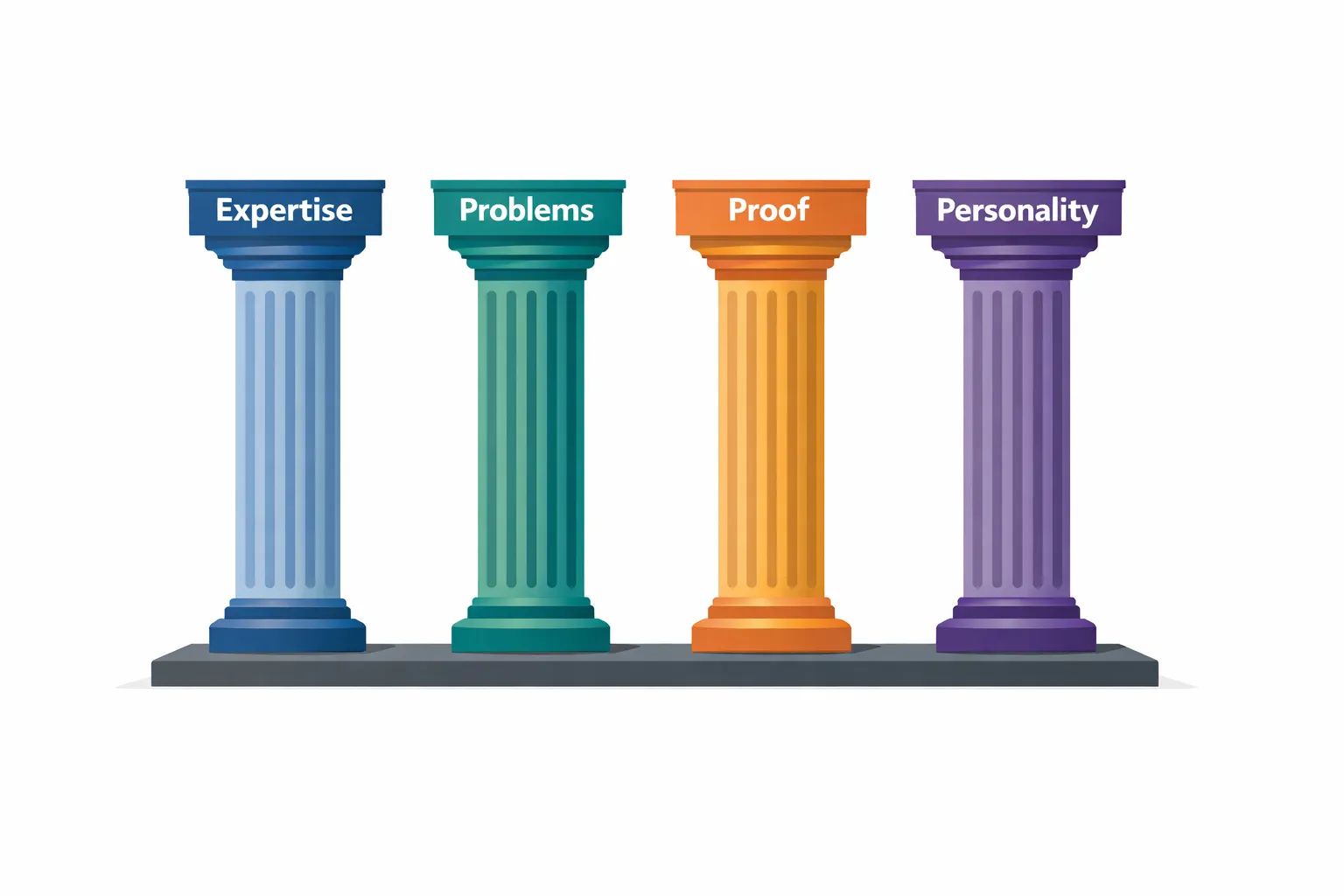
A simple structure:
- Expertise pillar
What you know best. Industry insights, how things work, mistakes to avoid. - Problem pillar
Your audience’s pain points, frustrations, and blind spots. - Proof pillar
Case studies, experiences, results, lessons from real work. - Personality pillar
Your values, opinions, stories, and point of view.
Every post you create should fit into one of these. If it doesn’t, skip it.
This alone cuts planning time by half.
Think in Content Buckets, Not Daily Posts
Daily posting sounds productive. It’s also unsustainable for most business owners.
Instead, plan in weekly content buckets.
For example:
- 2 value-driven posts
- 1 opinion or insight post
- 1 proof or story-based post
That’s 4 posts a week. Enough to stay visible without burnout.
Now here’s the trick. Each bucket can be reused across platforms with minor tweaks:
- One idea becomes a LinkedIn post
- The same idea becomes an Instagram carousel
- A shorter version becomes a story or a short video
You’re not creating more content. You’re extracting more value from one idea.
Use the 90-Minute Weekly Planning Rule
This is where busy owners win.
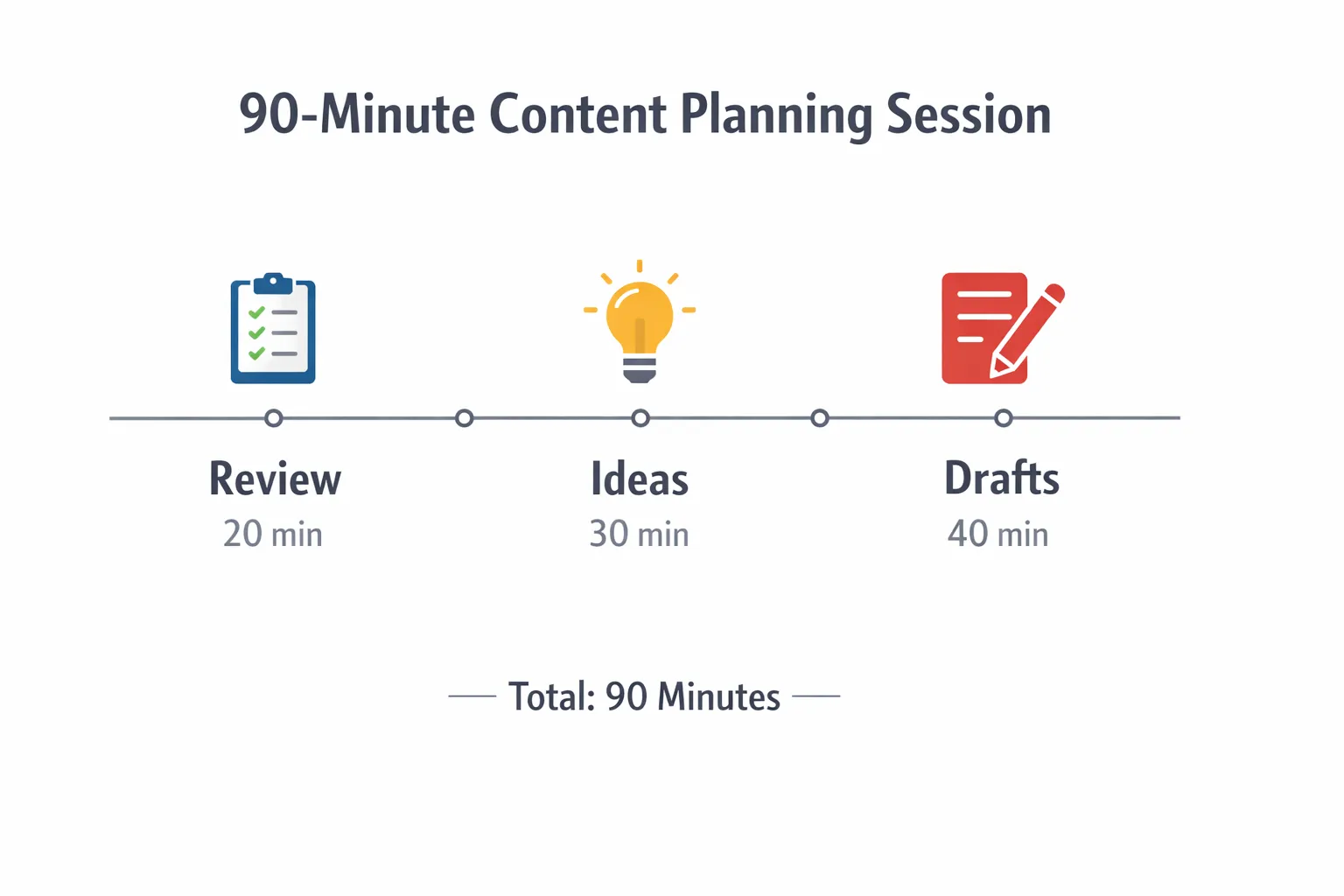
Block one 90-minute slot per week or two weeks. That’s it.
Break it like this:
- 20 minutes: Review last week’s performance and engagement
- 30 minutes: List content ideas under each pillar
- 40 minutes: Write rough captions or bullet outlines
Do not aim for perfection here. Rough drafts are enough.
Polish can happen later or be delegated. Planning is about decisions, not execution quality.
Over time, this becomes muscle memory. Planning that once felt heavy starts feeling obvious.
Batch Creation, Not Daily Posting
Context switching kills productivity.
Instead of creating content daily:
- Write all captions in one sitting
- Design all visuals in one sitting
- Schedule everything in one sitting
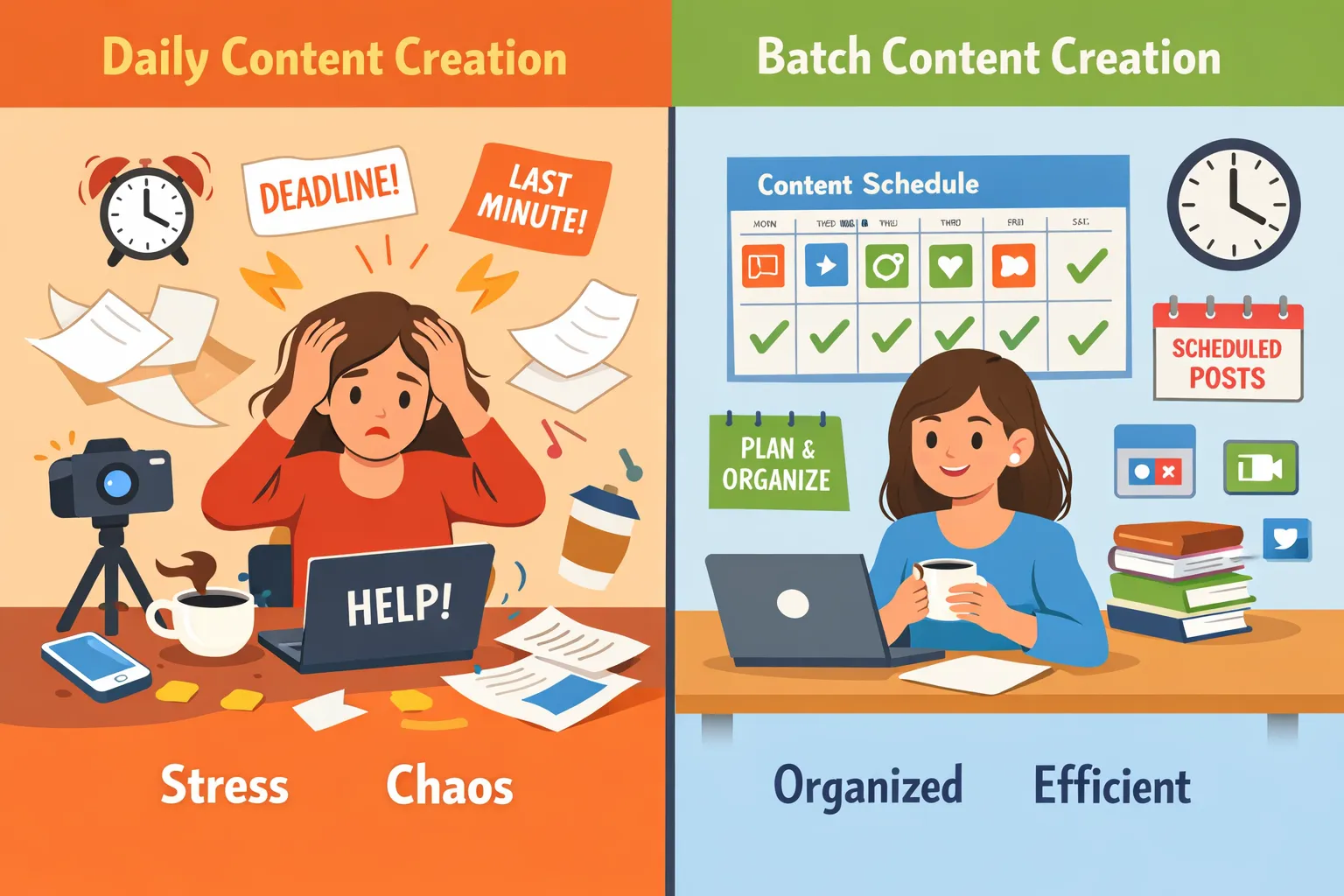
Batching reduces time spent by 40–60% for most business owners.
Tools help, but tools are secondary. Even a simple Google Doc and native scheduling work if your plan is clear.
The real efficiency comes from deciding in advance, not from fancy software.
Align Content With Current and Future Trends
Content planning today must account for where platforms are going, not just where they are.
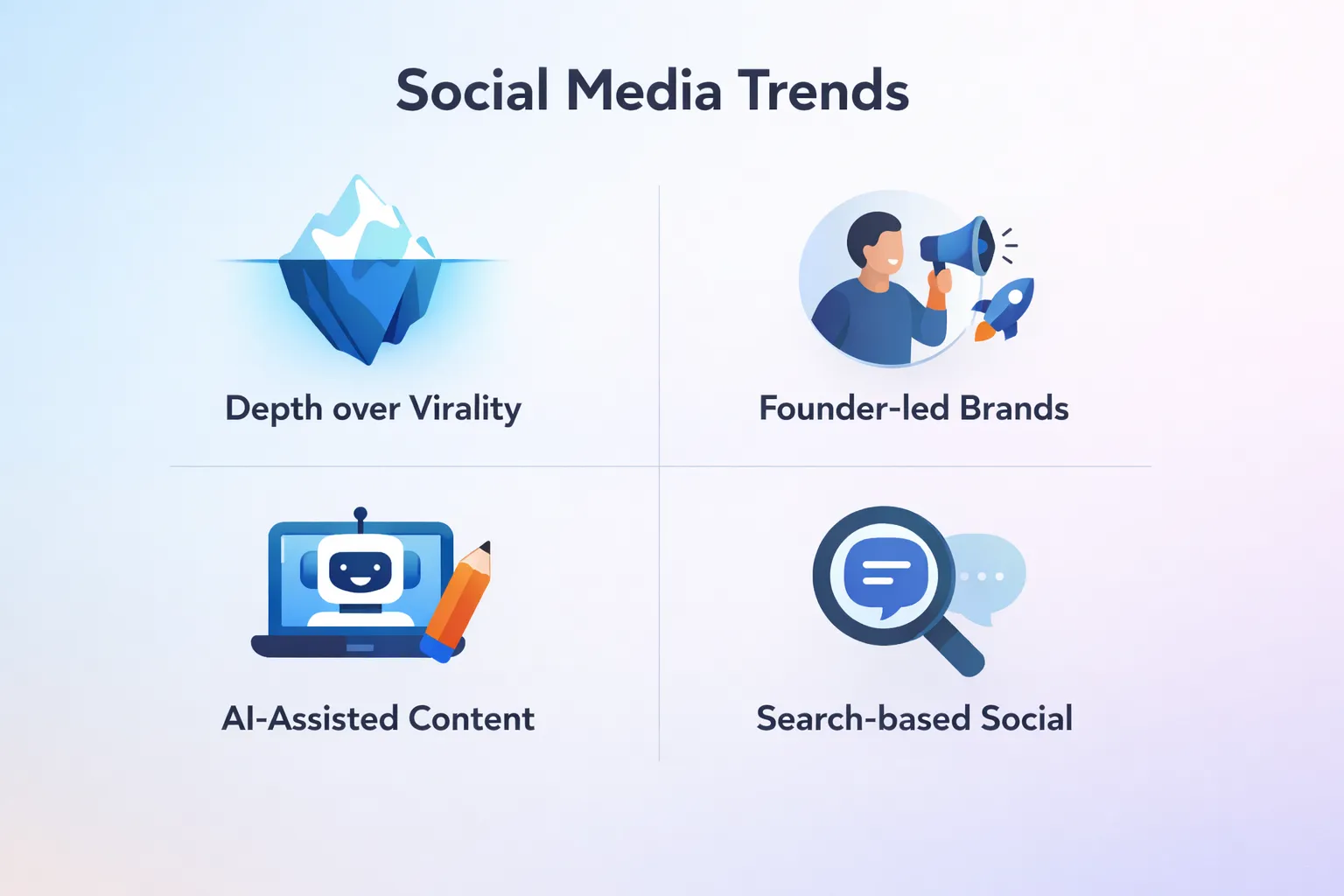
Key trends shaping social media content:
Depth over virality
Platforms are rewarding thoughtful, longer-form, value-heavy content. Shallow hacks are losing steam.
Creator-led brands
People trust people more than logos. Founder voice matters more than brand voice.
AI-assisted, human-led content
AI can help draft, repurpose, or summarize. But raw opinions, experiences, and judgment are still human territory.
Search-based social
Instagram, LinkedIn, and YouTube are becoming search engines. Content planning strategy must include keywords, not just creativity.
For busy owners, this means planning fewer but stronger posts that can live longer and be rediscovered.
If you’re a business owner and want your brand to grow via these channels, specially in YouTube, then you’ll need to stay relevant, visible, and profitable in the upcoming mode of brand communication
Measure What Actually Matters
Likes are nice. They don’t pay bills.
Track:
- Profile visits
- Saves and shares
- DMs and inquiries
- Comments with real questions
Content planning should evolve based on signals, not vanity metrics.
Once a month, ask:
- Which content brought conversations?
- Which posts positioned me as an expert?
- What confused people?
Then refine your next plan accordingly.
Common Mistakes to Avoid
- Planning content without a business objective
- Trying to be on every platform
- Posting trends that don’t match your brand
- Over-polishing and under-publishing
- Outsourcing content without a clear strategy
Content planning is a leadership task first. Execution can be delegated later.
Conclusion: Planning Is the Shortcut Busy Owners Need
Social media doesn’t have to feel chaotic or time-consuming.
When content planning is done right:
- You stop reacting and start leading
- You show up consistently without daily stress
- Your brand sounds intentional, not accidental
For busy business owners, planning is not an extra task. It’s the system that makes everything else lighter.
Decide once. Execute calmly. Let consistency compound.
Frequently Asked Questions
How often should busy business owners post on social media?
Three to four quality posts per week are enough if they are consistent, valuable, and aligned with business goals.
Is it okay to repeat content ideas?
Yes. Most of your audience won’t see everything. Repeating core ideas with fresh angles strengthens positioning.
Can content planning be outsourced?
Execution can be outsourced. Strategy and planning should stay with the business owner or brand lead.
Do I need separate plans for each platform?
No. Start with one core plan and adapt formats and tone per platform.
How far ahead should content be planned?
Two to four weeks ahead is ideal. It provides structure without killing flexibility.