
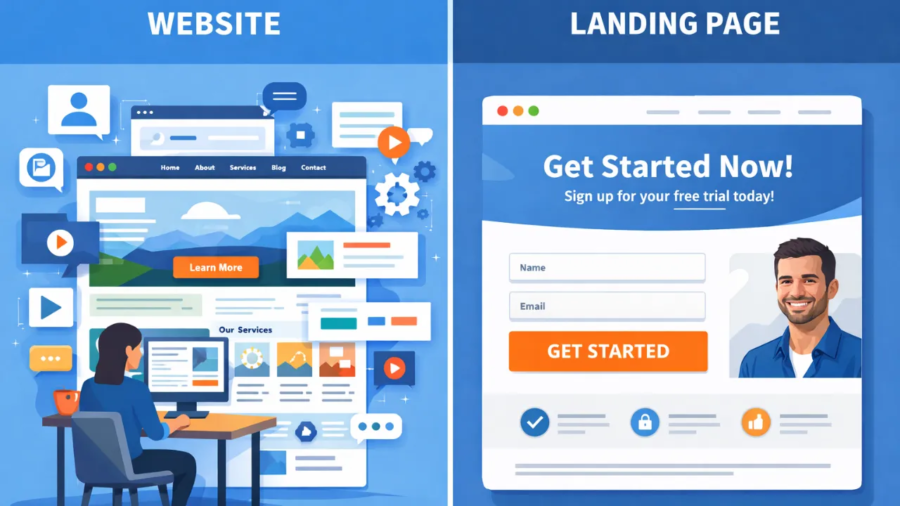
You run ads. You share posts. You push traffic. But your leads feel slow. Cost per lead feels high. People visit your site… and disappear. Most businesses assume they need more traffic. They usually don’t. They need the right page. Here’s what matters when you consider landing page vs website for your business.
What Is a Website, Really?
A website is your digital headquarters.
It is built to show:
• Who you are
• What you do
• Your services
• Your credibility
• Your brand story
• Multiple contact options
Think of it as a showroom.
A visitor can walk around, browse different rooms, compare services, read blogs, and maybe contact you.

Websites are perfect for:
• Brand building
• Long-term trust
• SEO traffic
• Authority positioning by creating strategic content
They are not designed to push one single action.
And that is the problem when your goal is lead generation.
What Is a Landing Page?
A landing page is a conversion machine. It does only one job. Make the visitor take one action.
That action could be:
• Book a consultation
• Download a guide
• Register for a webinar
• Request a quote
• Start a free trial

There are no menus. No distractions. No wandering.
Just one offer. One message. One goal.
Think of it as a salesperson who doesn’t talk about anything else until the visitor responds.
The Core Difference Between a landing page vs website
Here’s the simplest way to understand it.
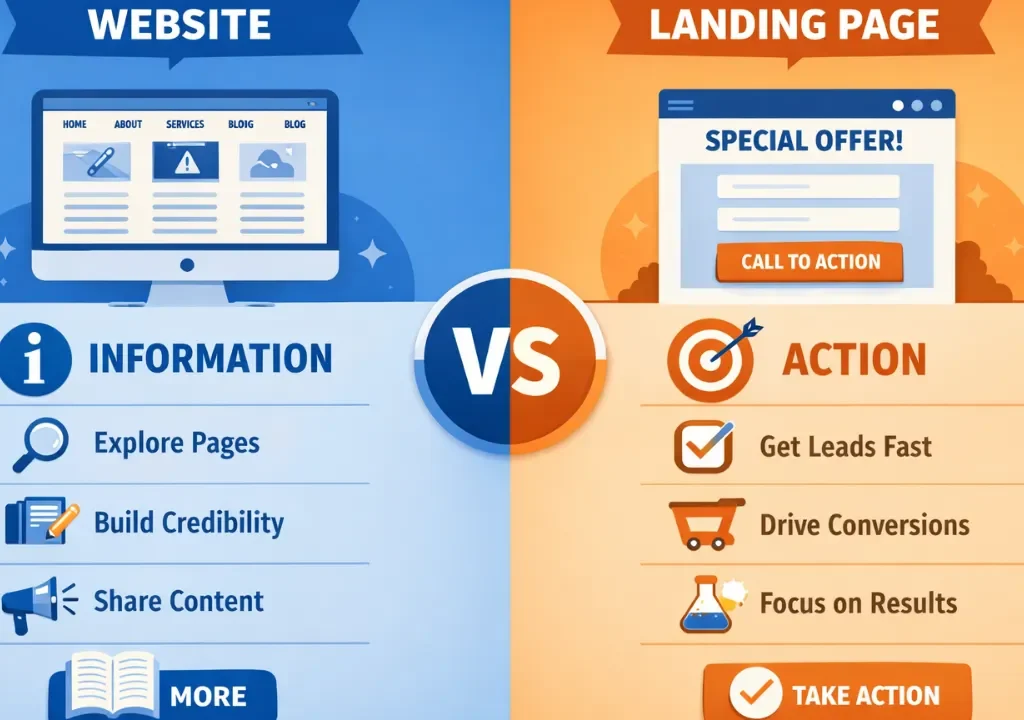
| Website | Landing Page |
|---|---|
| Built for information | Built for action |
| Has multiple pages | Used for long-term presence |
| Supports brand building | Supports lead or sales generation |
| Used for long term presence | Used for campaigns and promotions |
| Encourages browsing | Used for long-term presence |
A website educates. A landing page converts.
Both are important. But they are not interchangeable.
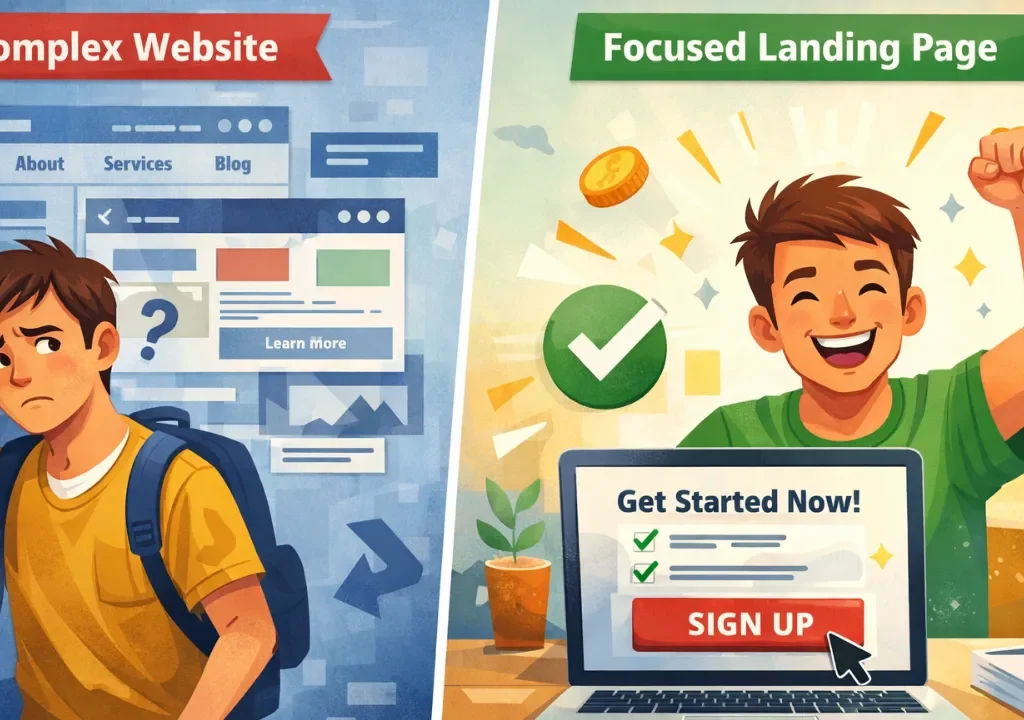
Why Websites Convert Poorly for Leads
Here’s the uncomfortable truth. Most websites leak leads.
Why?
Because visitors face too many choices.
Home
About
Services
Blog
Gallery
Careers
Contact
FAQs
Testimonials
The brain pauses. And when the brain pauses, people leave.
Industry example.
A Diagnostic Centre in Kolkata was running Google Ads directly to their homepage.
Traffic was coming. Leads were weak.
We built a single landing page for their health checkup package with:
• One headline
• One package offer
• One form
• One WhatsApp button
Result?
Cost per lead dropped by 62% in 21 days.
Same traffic. Better page.
Why Landing Pages Convert Better
Because landing pages remove friction.
They answer only four questions:
What is this
Why should I care
What do I get
What should I do next
Nothing else.
Here’s what landing pages do right:
• One message per page
• Clear benefit-driven headline
• Social proof close to the form
• Short focused copy
• Direct call to action
Visitors don’t get lost.
They decide.
When a Website Is Still Necessary
Landing pages are not a replacement for your website.
They are a conversion layer on top of it.
You still need a website for:
• Organic Google traffic
• Brand trust
• Business credibility
• Detailed service explanations
• Company story
Your website builds confidence.
Your landing page collects the lead.
They are partners, not competitors.
Real Industry Examples on Landing Page vs Website
Doctors and Clinics
Website:
Shows services, doctors, infrastructure, testimonials, location, and blog.
Landing page:
Runs ads for “Free Diabetes Checkup Camp” or “Full Body Checkup at ₹999” with one form and one WhatsApp button.
Which one gets leads?
The landing page.
Coaching Institutes
Website:
Shows courses, faculty, results, gallery, and blogs.
Landing page:
Runs ads for “Free Demo Class for Class 10 Maths” with one registration form.
Leads come from landing pages, not the main site.
Real Estate
Website:
Lists multiple projects.
Landing page:
One project. One location. One price range. One site visit form.
Again, the landing page wins.
The Cost Difference between a Landing Page and a Website
This is where it gets serious.
Google and Meta reward focused pages.
Higher conversion rates mean:
• Lower cost per lead
• Better ad relevance score
• More leads with the same budget
Sending paid traffic to a website usually wastes money. A page has many links. People get confused, and they leave.
Sending it to a focused landing page prints leads.
A landing page removes that confusion.
- One message.
- One offer.
- One button.
That is why landing pages convert much better than normal websites.
The Smart Approach: Use Both
Here’s what actually works best.
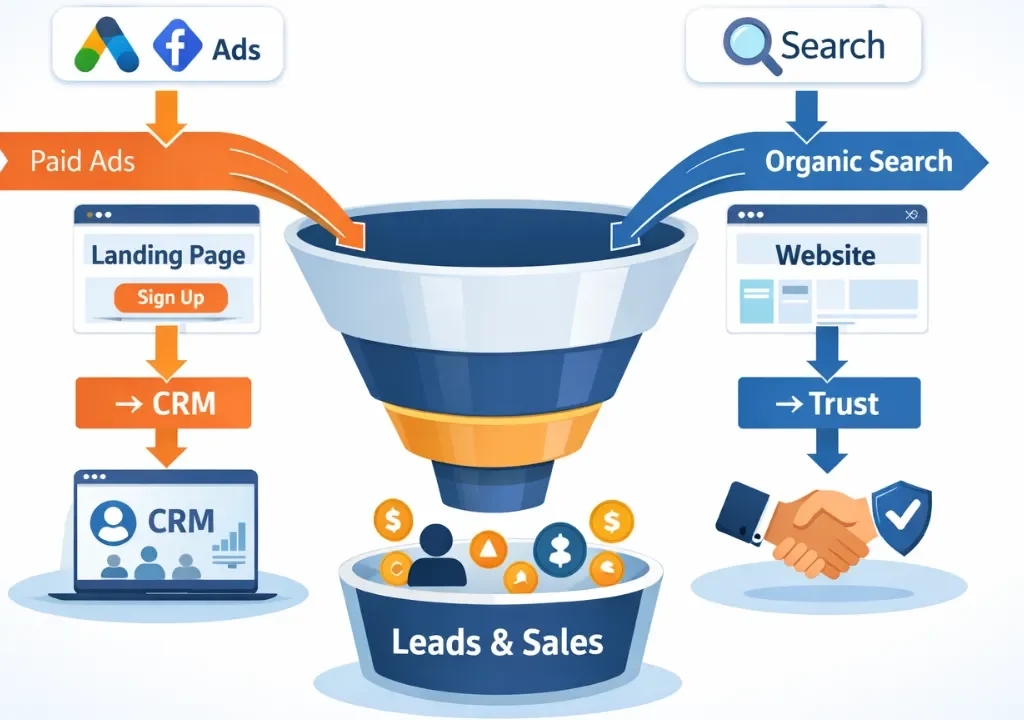
Your website builds trust and brand presence.
Your landing pages run your marketing campaigns.
Ads go to landing pages.
Organic search traffic explores your website.
This combination gives you both credibility and conversions.
Smart businesses do this:
• Website for organic traffic and credibility
• Separate landing pages for every ad campaign
• Leads go to CRM or WhatsApp
• Website builds trust in the background
This is how high-performing funnels are built.
Landing Page vs Website: Cost Comparison
| Factor | Website | Landing Page |
|---|---|---|
| Initial cost | Higher | Lower |
| Time to build | More | Less |
| Maintenance | Ongoing | Minimal |
| SEO growth | Strong | Limited |
| Lead generation | Indirect | Direct |
Which One Should You Choose Right Now?
Ask yourself three simple questions:
- Do I need leads fast?
- Do I need to build long-term brand trust?
- Am I running ads?
If your answer is mostly about leads and ads, start with a landing page.
If your answer is about growth, visibility, and authority, you need a website.
If you are serious about your business, use both.
Bottom Line
A website is your digital identity.
A landing page is your digital salesperson.
One builds trust.
The other brings leads.
If you are running ads and sending traffic to your homepage, you are burning money quietly.
Switch to landing pages.
Keep your website as your authority base.
That single shift can double your leads without increasing your budget.
FAQs
Can I use only a landing page without a website?
Yes, for short-term campaigns and ads. But for long-term trust and organic traffic, you still need a website.
How many landing pages should I create?
One for each offer or campaign. Different service, different page.
Do landing pages work for small businesses?
They work best for small businesses because budgets are limited and results matter.
Should landing pages be SEO optimized?
Only if you plan to drive organic traffic. For ads, conversion matters more than SEO.
What is a good conversion rate for a landing page?
Anything above 5% is decent. Well-optimized pages often hit 10 to 25%.