
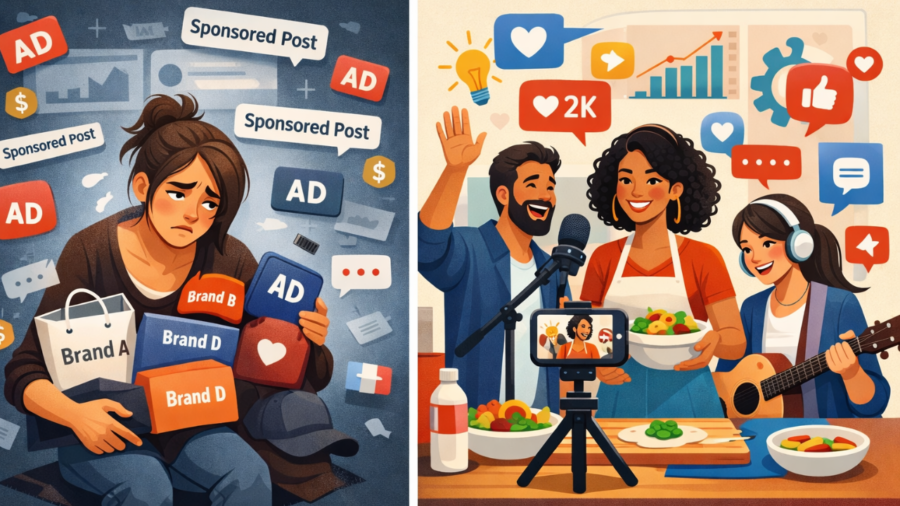
For nearly a decade, influencer marketing was the fastest-growing engine in digital advertising. Brands poured billions into creators across Instagram, YouTube, and TikTok, hoping that trusted personalities would drive product discovery and sales.
For a while, the formula was simple.
Large follower base → Sponsored post → Engagement → Sales.
But by 2025, the system started cracking.
A cultural shift called de-influencing exposed the weaknesses in the traditional pay-to-promote model. By 2026, new industry data shows declining conversions, rising audience skepticism, and a powerful behavioral change known as sponsored blindness.
The result is not the death of influencer marketing but a structural transformation of how influence works online.
Here’s what’s really happening.
The 2025 De-Influencing Surge That Broke the Pay-to-Play Model
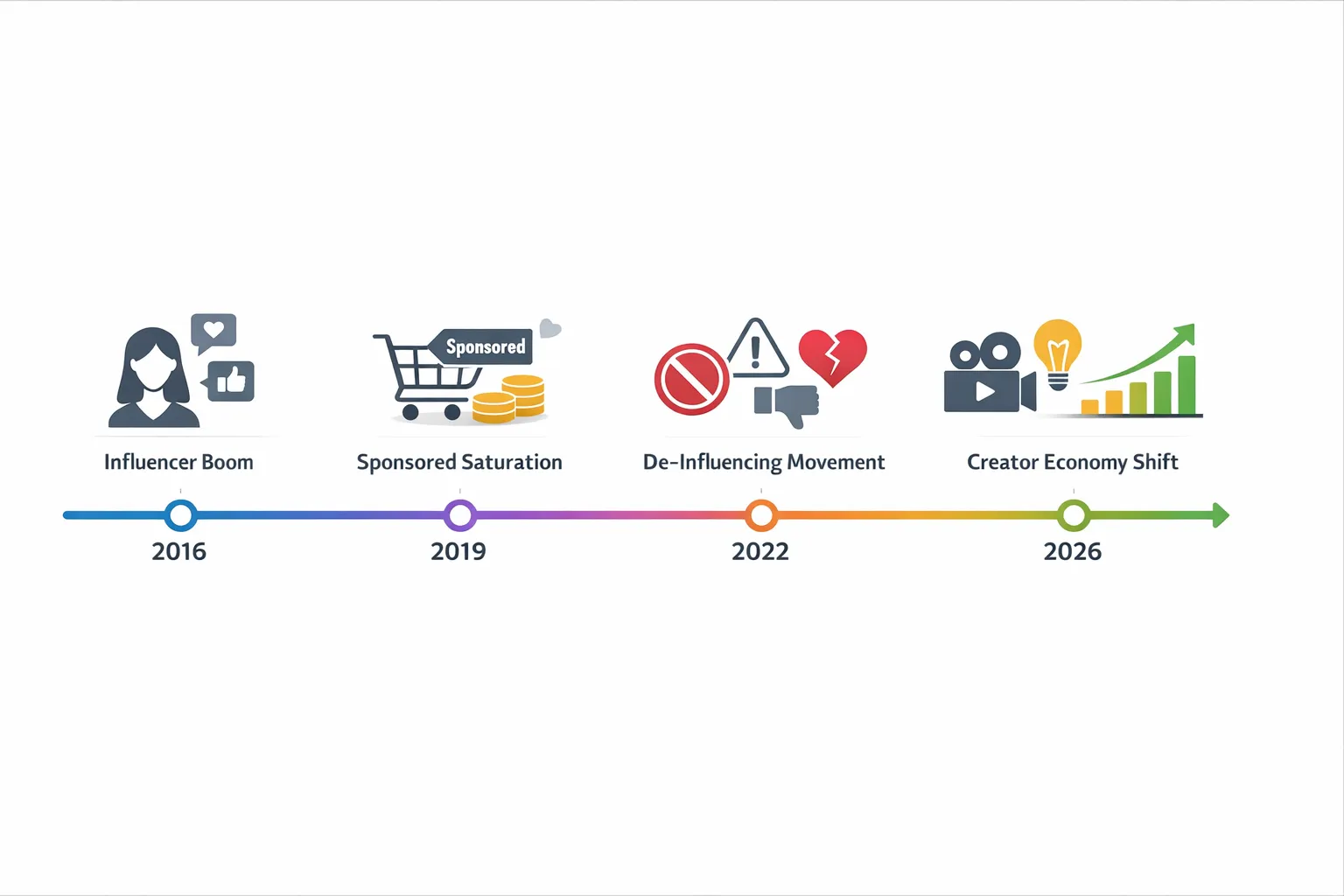
In 2025, a major shift began across social media platforms. Instead of promoting products, many creators started doing the opposite.
They began de-influencing.
These videos and posts told audiences:
- Which products were overpriced
- Which viral items were unnecessary
- Which influencer recommendations were misleading
This movement quickly went viral.
Instead of polished promotional content, audiences were suddenly seeing creators openly critique popular brands.
Why De-Influencing Gained Momentum
Three forces fueled the movement.
1. Audience Fatigue
Social feeds were flooded with sponsored content. Followers felt like every recommendation was an advertisement.
2. Creator Credibility Pressure
Many creators realized that constant promotions were eroding their trust with audiences.
3. Algorithmic Incentives
Platforms rewarded honest, controversial, or critical content because it generated more engagement.
The ripple effect was significant.
Brands realized that audience trust had become fragile, and the traditional influencer marketing model was losing credibility.
The 2026 Conversion Collapse for Scripted Influencer Content
One of the clearest signals of change appeared in campaign performance data in 2026.
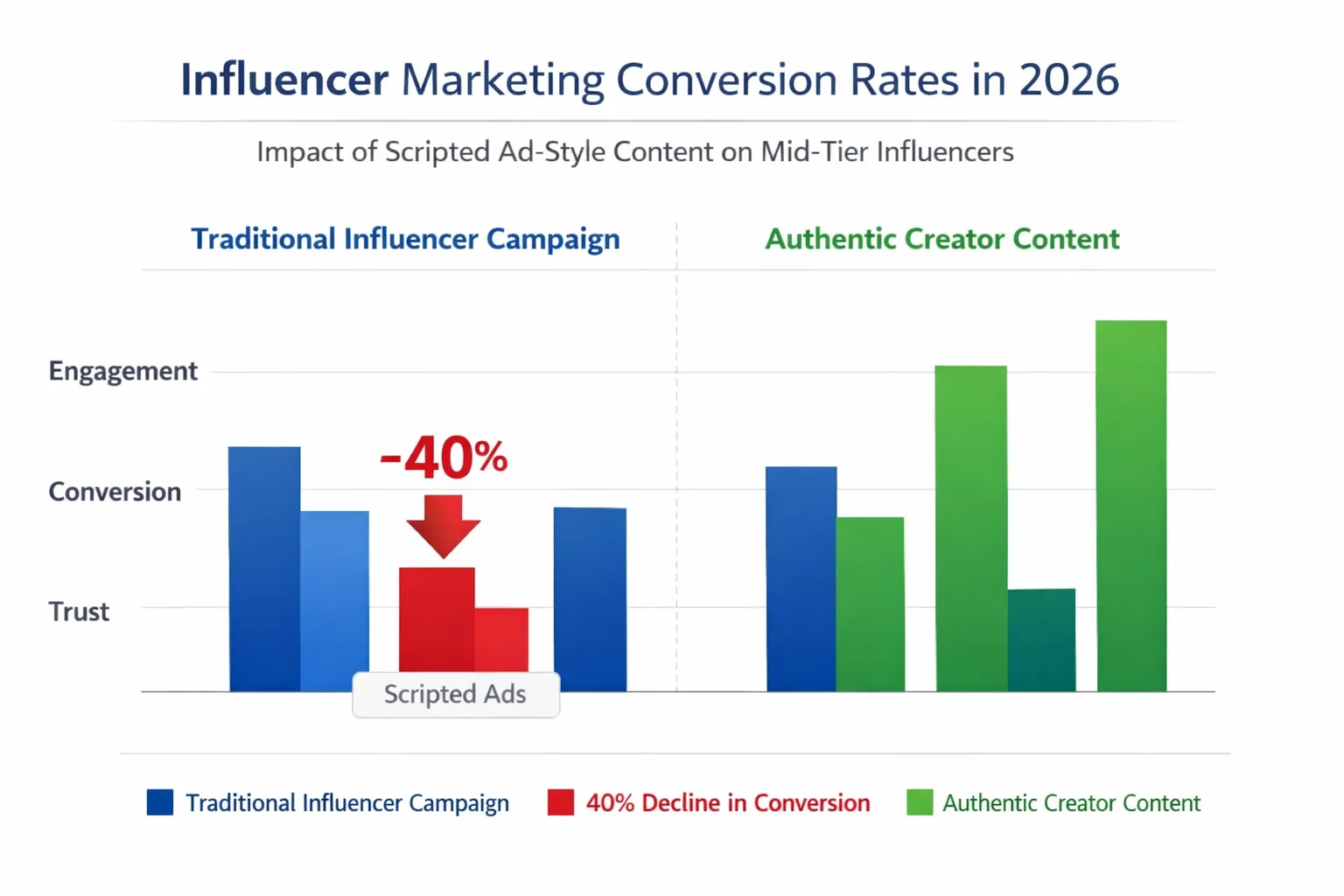
Across several industries, marketers reported a sharp decline in conversion rates from mid-tier influencers.
The reason wasn’t reach.
It was a content style.
Many influencers continued producing scripted promotional content using the same format:
- Highly polished visuals
- Scripted brand messaging
- Predictable product praise
- Clear call-to-action links
Audiences immediately recognized these patterns.
Marketing analytics platforms reported that mid-tier influencers who failed to evolve saw conversion rates drop by roughly 40% compared to earlier campaigns.
This decline reflects a deeper shift in audience psychology.
People are no longer evaluating whether content looks good.
They are evaluating whether it feels genuine.
The Emergence of Sponsored Blindness
Another major behavioral trend shaping marketing in 2026 is sponsored blindness.
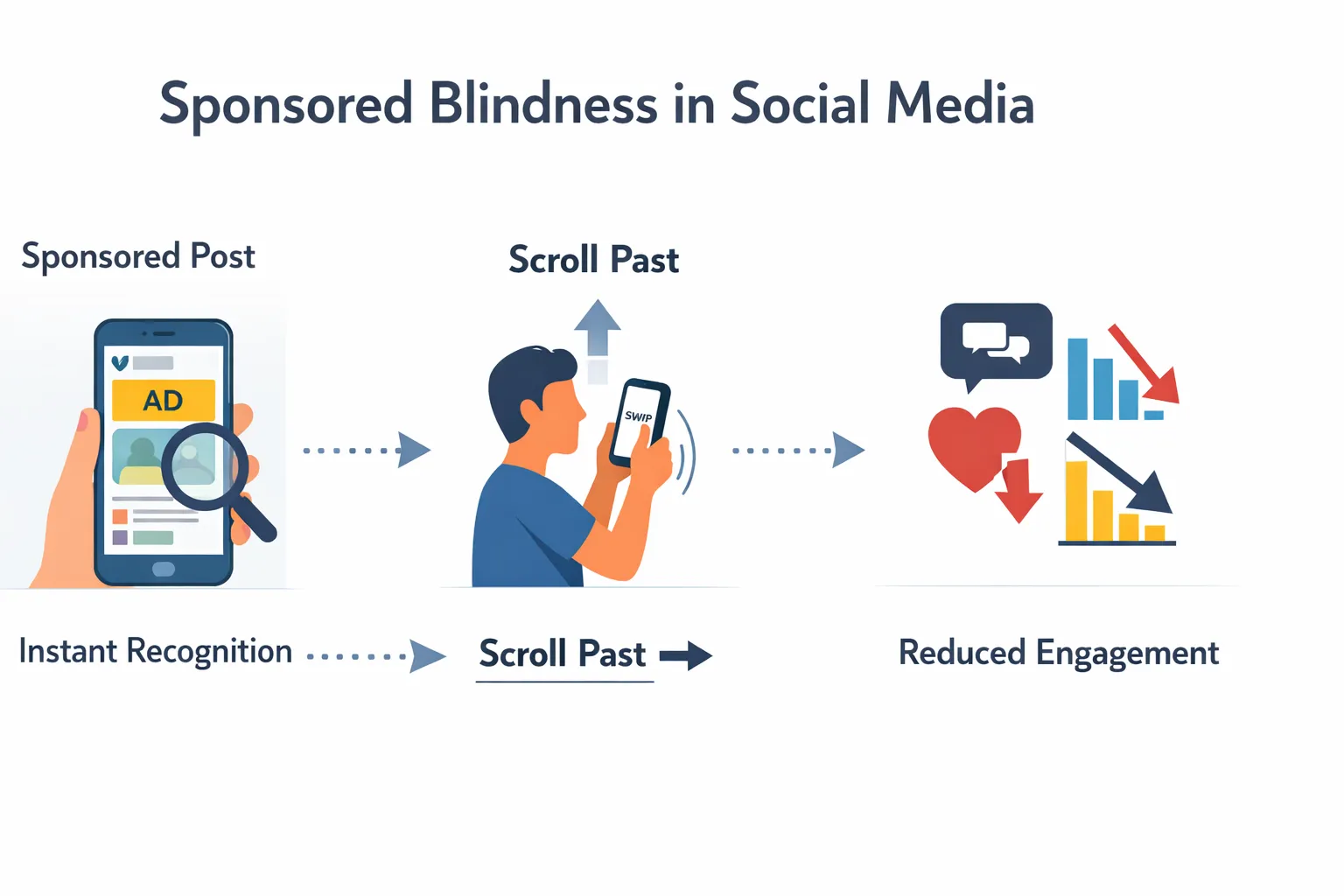
The concept is similar to banner blindness in early internet advertising.
Users have developed the ability to instantly recognize promotional content and mentally ignore it.
How Sponsored Blindness Works
Audiences now detect promotional signals within seconds:
- “Paid partnership” labels
- Discount codes in captions
- Repetitive brand talking points
- Sudden product placements in unrelated content
Once these cues appear, many users simply scroll past.
Some go further.
They mute, unfollow, or block creators who repeatedly act as digital billboards.
This behavioral shift is forcing brands to rethink how influence actually works.
Why the Old Influencer Model Is Losing Power
Several structural weaknesses have become impossible for brands to ignore.
1. Follower Count No Longer Equals Influence
For years, marketing teams used follower numbers as a proxy for impact.
But follower count does not guarantee:
- Trust
- Engagement quality
- Purchase intent
Many creators built large audiences during the early social media boom but struggle to convert attention into action today.
2. Engagement Metrics Are Increasingly Unreliable
Likes and comments can be misleading.
They often include:
- Passive engagement
- Bot interactions
- Low-intent reactions
Modern marketing teams are shifting toward deeper metrics such as:
- Conversion rates
- Cost per acquisition
- Repeat customer behavior
3. Consumers Now Trust Expertise Over Popularity
In many industries, audiences prefer credible experts over lifestyle influencers.
For example:
- A dermatologist reviewing skincare products
- A fitness coach explaining supplements
- A financial expert analyzing investment apps
Expert-led content builds authority and drives higher trust.
The Strategic Shift: From Influencers to Creator Partners
The transformation in 2026 is not about abandoning creators.
It’s about redefining the relationship between brands and creators.
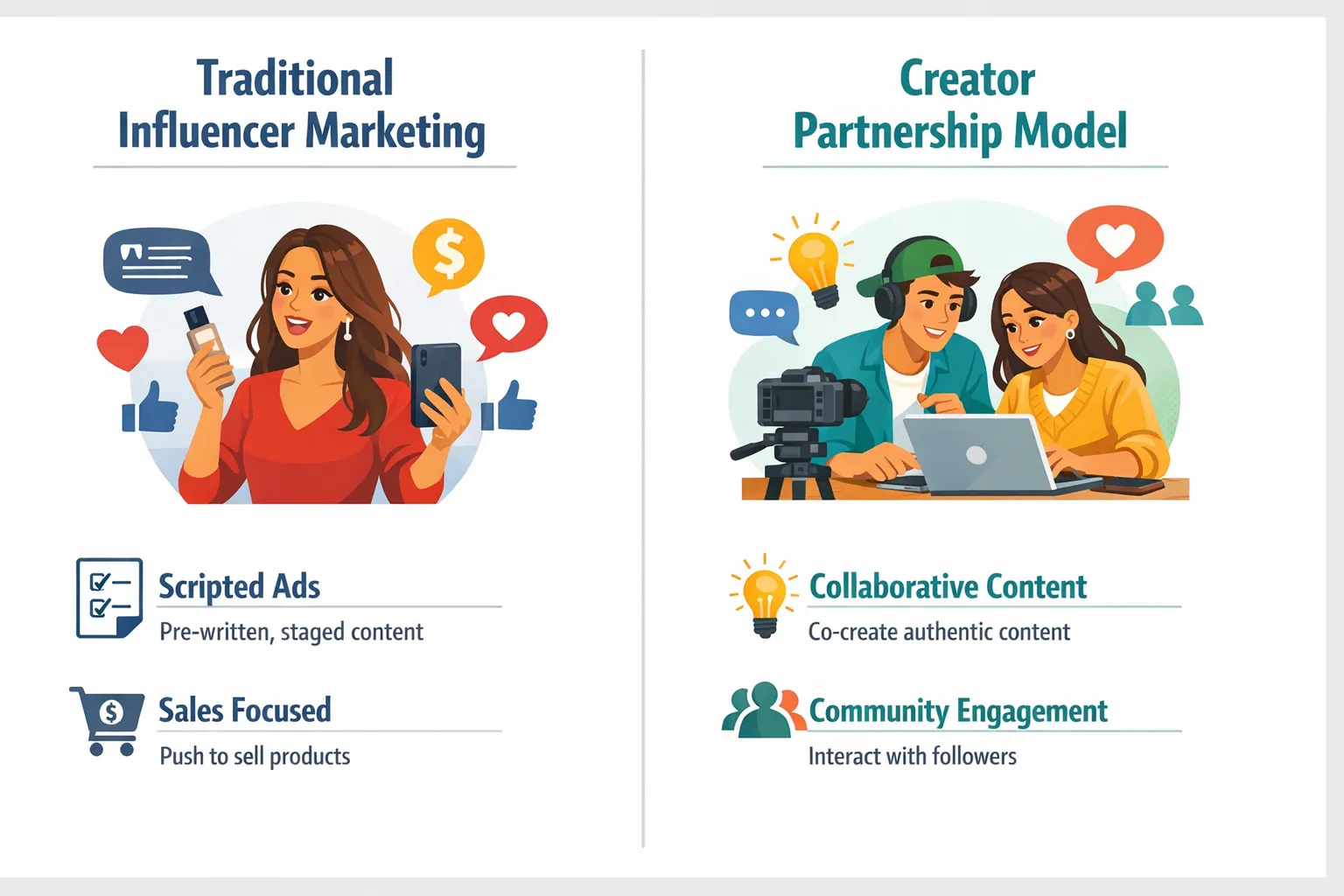
Instead of transactional promotions, companies are building long-term partnerships.
Old Model
- One-time sponsored posts
- Scripted brand messaging
- Campaign-based relationships
New Model
- Long-term creator partnerships
- Collaborative storytelling
- Authentic brand integration
This shift produces content that feels natural rather than promotional.
Micro Creators Are Becoming More Valuable Than Mega Influencers
One of the most visible changes in the creator economy is the rise of smaller creators.
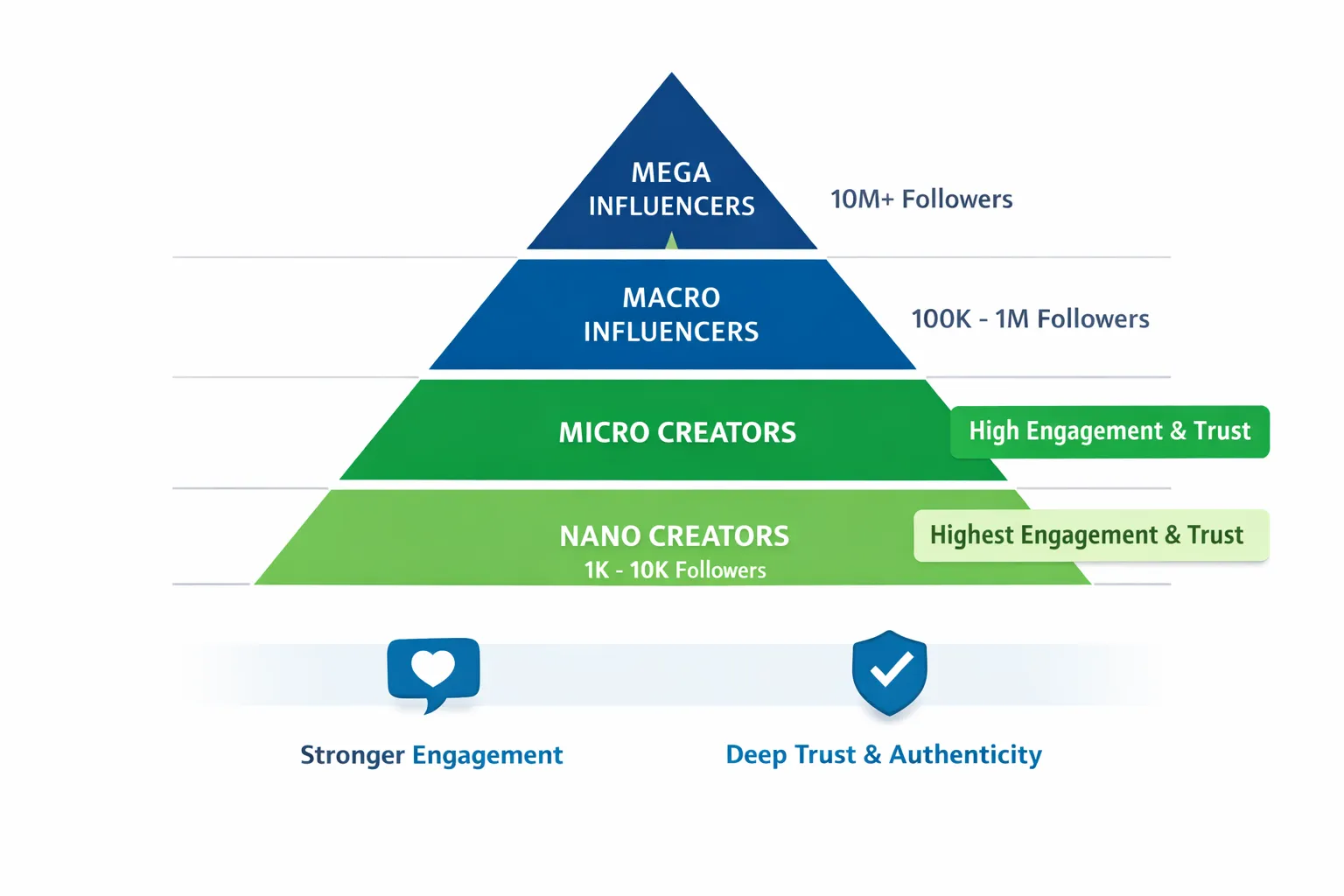
Micro creators typically have:
- 10,000 to 100,000 followers
- Highly engaged communities
- Strong niche expertise
Because their audiences feel more personal and interactive, their recommendations carry greater weight.
For many brands, working with ten niche creators can outperform a single celebrity influencer campaign.
Founder-Led Content Is Replacing Influencer Dependence
Another trend shaping brand communication is the rise of founder-led storytelling.
Consumers increasingly want to hear directly from:
- Company founders
- Product designers
- Industry experts
- Medical professionals or educators
This content feels more transparent and informative.
For example, a founder explaining product development often creates stronger credibility than an influencer endorsement.
Many brands now encourage leadership teams to become visible online through:
- YouTube channels
- LinkedIn content
- Educational social posts
Community-Led Marketing Is the New Growth Engine
Influencer marketing historically operated as a broadcast model.
One creator promoted a product to a large audience.
In 2026, brands are focusing on community ecosystems instead.
These include:
- Discord communities
- WhatsApp groups
- Private brand forums
- Niche creator communities
Inside these environments, recommendations feel more personal and less transactional.
Creators act as community leaders rather than advertising channels.
This approach drives deeper loyalty and stronger repeat purchases.
AI Is Reshaping How Brands Evaluate Creators
Artificial intelligence is also changing the influencer economy.
Brands now use AI tools to analyze:
- Authentic engagement patterns
- Audience demographics
- Fraud detection
- Predictive campaign performance
These tools help marketing teams identify creators who generate real influence rather than artificial engagement.
At the same time, creators are using AI to improve:
- Content production
- Research quality
- Editing and storytelling
The result is a creator ecosystem that is becoming more strategic and performance-driven.
What Influencer Marketing Will Look Like After 2026
The next phase of creator marketing will look very different from the past decade.
Several trends will define the future.
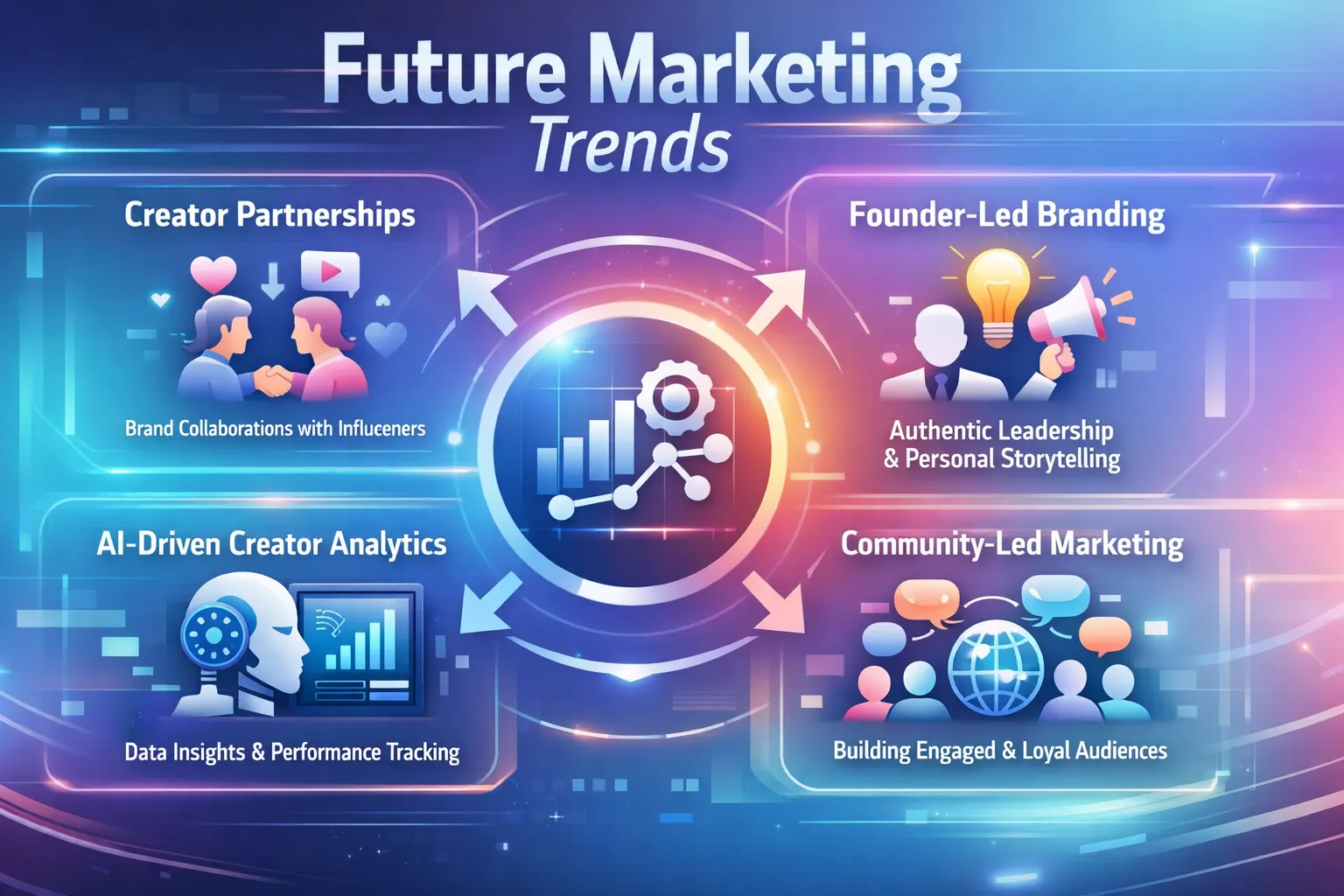
Authentic Creator Narratives
Audiences will reward creators who integrate brands naturally into their content rather than delivering scripted promotions.
Performance-Based Partnerships
More brand collaborations will include revenue sharing, affiliate commissions, or performance incentives.
Search-Driven Creator Content
Social platforms are becoming search engines. Educational and searchable content will outperform short-term promotional posts.
Creator-Owned Brands
Many successful creators are launching their own products, turning influence into entrepreneurship.
What This Means for Brands
For businesses building marketing strategies today, the lessons are clear.
Influence is no longer about visibility alone.
It is about credibility, trust, and community connection.
Brands must evaluate creators not by popularity but by:
- Audience trust
- Expertise
- Content quality
- Community engagement
The companies that adapt to this new reality will build stronger and more sustainable marketing systems.
Conclusion
Influencer marketing is not ending, but the era of easy promotions is over.
The 2025 de-influencing wave exposed the weaknesses of the pay-to-play model.
By 2026, falling conversion rates and the rise of sponsored blindness have forced brands to rethink how influence works.
The future belongs to creators who educate, build communities, and maintain genuine trust with their audiences.
For brands, the opportunity is not to abandon creators but to collaborate with them in smarter, more authentic ways.
The next generation of marketing will be driven not by influence alone but by credibility, storytelling, and real human connection.
FAQs
What caused the influencer marketing shift in 2026?
The shift was driven by the de-influencing movement, declining campaign conversions, rising audience skepticism, and the emergence of sponsored blindness.
Are micro influencers more effective than large influencers?
In many cases, yes. Micro creators often have stronger relationships with their audiences and higher engagement quality.
Should brands stop using influencers?
No. Instead of abandoning influencers, brands should build long-term partnerships with creators who align with their audience and values.
How can creators stay relevant in the new influencer economy?
Creators must focus on authenticity, niche expertise, educational content, and community engagement rather than relying solely on sponsored promotions.