

Here’s the truth most service businesses learn too late.
People don’t choose you because you say you are good.
They choose you because your content made them feel confident before they ever spoke to you.
That is why having a proper content strategy for service business is no longer optional. It is your silent salesperson. It works when you are busy, sleeping, or closed for the day. And when done right, it brings better clients, not just more leads.
Let me explain what actually works.
What Is a Content Strategy for Service Business?
A content strategy for a service business is a planned way of creating and sharing useful content that attracts, educates, and converts your ideal customers.
It answers three simple questions:
Who are you trying to help?
What problems are they searching for?
What content will make them trust you?
Instead of random posts, you build content with purpose. Every blog, video, reel, or post moves people one step closer to choosing you.
This is how service brands grow without shouting ads all the time.
Why Service Businesses Need a Content Strategy More Than Product Brands
Product brands can rely on visuals, discounts, and impulse buying.
Service businesses run on trust.
Clients cannot “test” your service before paying you. They judge you by what they see online. That is where your content strategy becomes your reputation for your business and creates your brand identity.
Good content:
- Builds authority
- Reduces price resistance
- Pre-qualifies leads
- Creates inbound enquiries
- Positions you as the expert, not a commodity
Bottom line: your content decides whether people see you as a cheap option or a trusted professional.
Step 1: Define Your Ideal Client Clearly
Every content strategy starts here.
Stop trying to attract everyone. Decide:
- Who is your best client?
- What do they struggle with daily?
- What confuses them?
- What are they afraid of?
- What do they search on Google or YouTube?
A doctor, a real estate consultant, a marketing agency, and a CA will all need very different content, even if they are all “service businesses.”
Your content must feel like it was written only for them. Imagine if you are a doctor and want to build your brand, then your digital presence is a must, and to build your digital brand, your content is the key to your success.
Step 2: Choose the Right Content Platforms
You do not need to be everywhere. You need to be where your client already spends time.

For most service businesses:
- Blogs are best for Google traffic
- YouTube is best for trust-building
- LinkedIn is best for professional visibility
- Instagram works for daily recall and short education
Your content strategy should focus on 1–2 core platforms and 1–2 supporting platforms. That is enough to grow consistently.
Step 3: Decide Your Core Content Pillars
Content pillars are the main topics you will talk about again and again.
For example:
- Education about your service
- Common mistakes people make
- Case studies and success stories
- Pricing, ROI, and value explanation
- Behind-the-scenes and process content
- Myth busting
- FAQs
These pillars give structure to your content and prevent content fatigue.
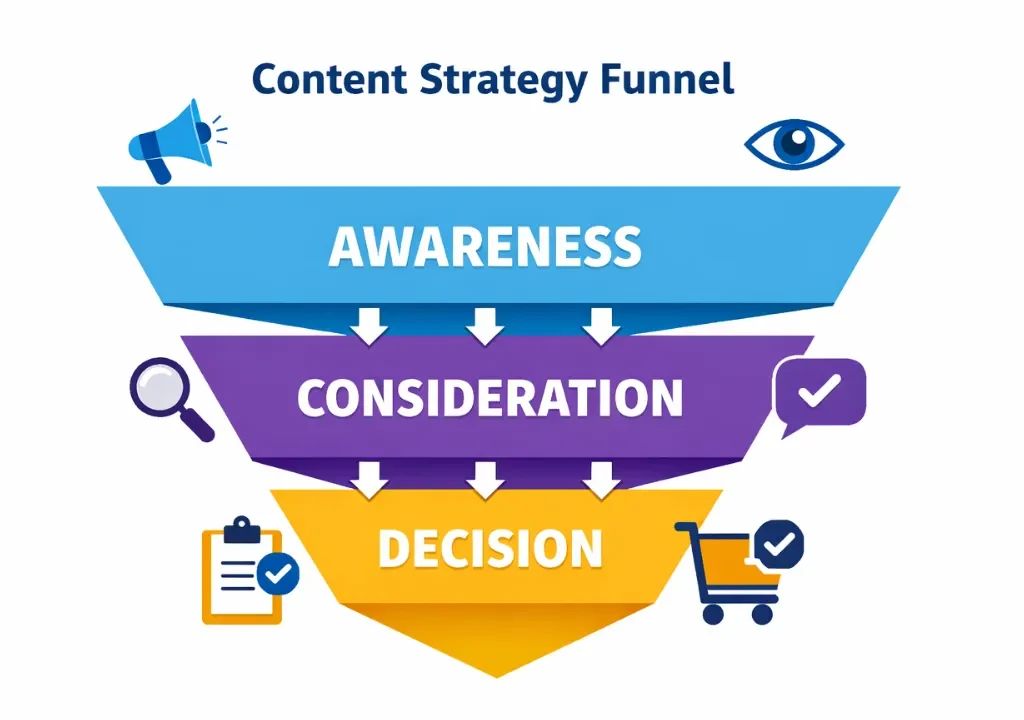
Step 4: Use the 3-Layer Content Framework
Every strong content strategy should focus on three layers:
1. Awareness Content
Helps people understand their problem
Example: Why most service businesses struggle to get quality leads
2. Consideration Content
Helps them compare and evaluate
Example: Website vs social media for service businesses
3. Decision Content
Pushes them to choose you
Example: Why our process gets better results for local businesses
Most brands only create awareness content. You need all three.
Step 5: Build Trust with Proof
Trust converts more than design.
Add:
- Client stories
- Before-after results
- Screenshots
- Process explainers
- Behind-the-scenes work
- Real answers to doubts
This strengthens your content strategy for your service business and filters serious buyers.
Step 6: Create a Simple Weekly Content Plan
Here’s a simple plan any service business can follow:
- 1 blog post per week
- 2 short videos
- 2 social posts
- 1 client proof post
That alone is enough to build authority and inbound leads within months.
Consistency matters more than volume.
Step 7: Optimize Content for Local Search
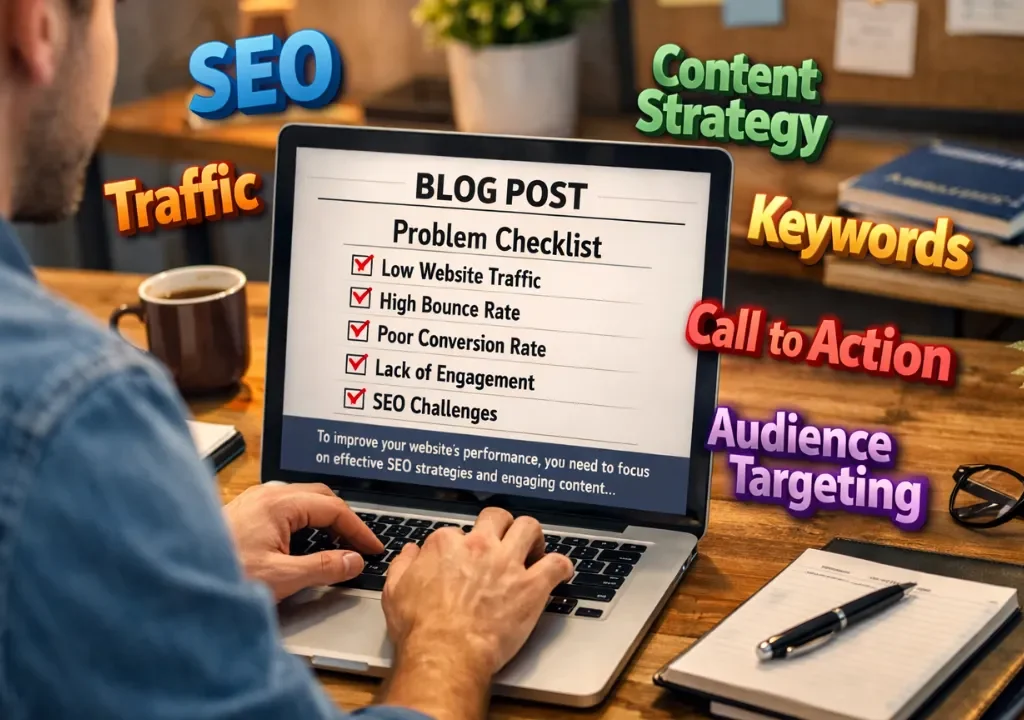
If you are a local service provider, your content strategy must include local SEO.
Use:
- Location-based keywords
- Google Business Profile posts
- Local case studies
- Area-specific blogs
This brings high-intent traffic that converts fast.
Step 8: Repurpose Everything
One blog can become:
- YouTube video
- Instagram reels
- LinkedIn posts
- Carousel posts
- Email newsletter
This multiplies reach without creating more work. A smart content strategy always uses repurposing.
Step 9: Measure What Actually Matters
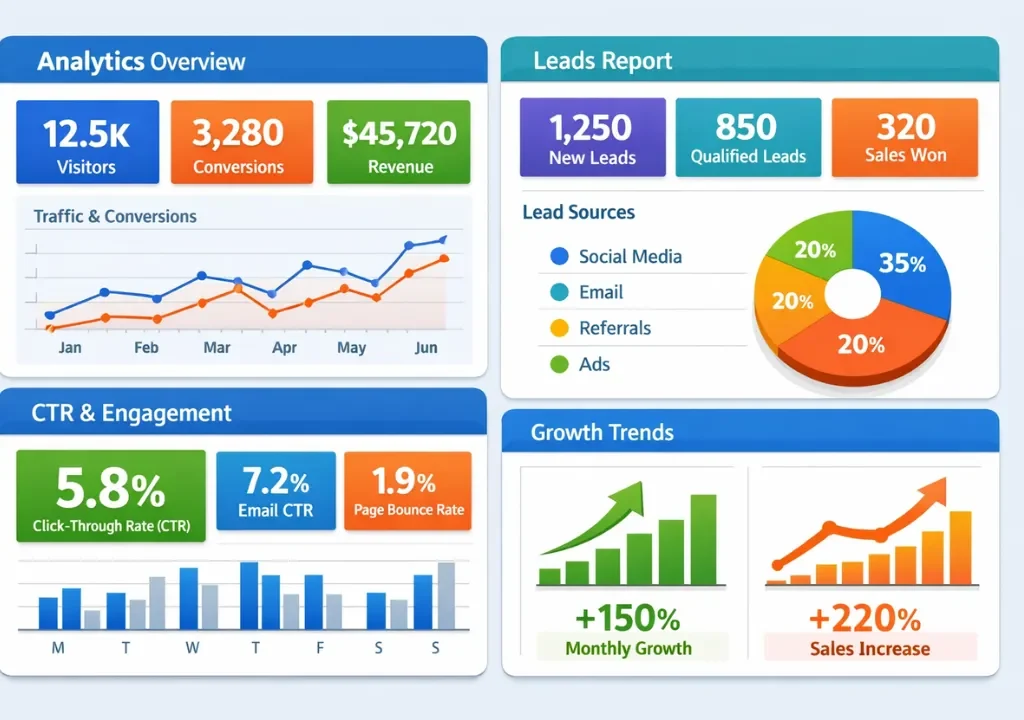
Track:
- Website enquiries
- WhatsApp leads
- Calls
- Consultation bookings
- Time spent on content pages
You should build your content strategy that must bring leads for your service business, not just likes.
Common Mistakes to Avoid
- Posting randomly
- Only talking about your service
- Ignoring SEO
- No clear CTA
- Inconsistent posting
- Copying competitors blindly
These mistakes kill growth even with good content.
Conclusion
A strong content strategy for service business is the biggest long-term asset.
- Ads bring temporary traffic.
- Content builds permanent visibility.
- Trust brings better clients.
- Authority brings pricing power.
If you want steady leads without running after people, build your content like a system, not like a side activity.
That is how modern service brands grow.
FAQs
1. What is the best content strategy for service business?
The best content strategy for a service business focuses on solving client problems, building trust, and guiding them from awareness to decision using blogs, videos, and social content.
2. How long does a content strategy take to show results?
Usually, 2 to 4 months for visibility and 4 to 6 months for consistent leads if done properly.
3. Which platform is best for service businesses?
Blogs and YouTube are the most powerful platforms for long-term organic growth.
4. Is content marketing expensive?
No. Content marketing for service businesses is one of the lowest-cost and highest-return growth strategies.
5. Can local businesses use content strategy?
Yes. A local-focused content strategy for a service business brings high-intent nearby customers.
[…] • Brand building• Long-term trust• SEO traffic• Authority positioning by creating strategic content […]
[…] Content planning today must account for where platforms are going, not just where they are. […]