

Trust is the foundation of every successful brand. Customers may try a product once because of advertising or curiosity, but they stay loyal only when they trust the brand behind it.
Here’s the challenge. In today’s crowded market, people are constantly exposed to advertisements, promotions, and marketing messages. Most of them sound similar. Features, discounts, and offers are everywhere.
So what makes a brand believable?
The answer often lies in storytelling.
Brand storytelling helps businesses communicate values, purpose, and authenticity in a way that resonates emotionally with customers. Instead of simply selling products, brands begin to share stories that people relate to, remember, and trust.
Let’s explore how brand storytelling works and how businesses can use it to build long-term trust.
Why Trust Matters in Modern Branding
Customers today are more informed than ever before. Before buying anything, they research online, read reviews, compare options, and observe how brands behave.
Trust influences several critical decisions:
- Whether a customer buys from a brand for the first time
- Whether they recommend the brand to others
- Whether they remain loyal even when competitors appear
When customers trust a brand, they don’t just purchase products. They develop an emotional connection.
That connection becomes the real competitive advantage.
Brand storytelling helps build this connection by making brands feel human, relatable, and authentic.
What Is Brand Storytelling?

Brand storytelling is the practice of communicating a brand’s purpose, values, journey, and impact through meaningful narratives.
Instead of focusing only on what the product does, storytelling highlights:
- Why the brand exists
- What problems does it want to solve
- Who it helps
- What values guide its decisions
A strong brand story makes the business more than just a seller. It turns the brand into something people believe in.
Good storytelling often includes elements like:
- A clear purpose
- A relatable problem
- A meaningful journey
- Real outcomes or transformation
When these elements come together, customers begin to see the brand as authentic rather than promotional.
The Psychology Behind Storytelling and Trust
Stories influence how people process information.
Research in behavioral psychology shows that humans remember stories far better than plain facts or statistics. Stories activate emotions, imagination, and empathy.
When people hear a story, they begin to visualize situations and relate them to their own experiences.
This psychological connection creates two powerful effects:
Emotional Connection
Stories allow customers to see themselves in the narrative. They feel understood. When a brand understands its audience, trust naturally grows.
Perceived Authenticity
Brands that openly share their journey, struggles, or mission appear more transparent. Transparency builds credibility.
In contrast, purely promotional messaging often feels transactional and forgettable.
Elements of a Trust-Building Brand Story
Not every story builds trust. Some stories sound like marketing slogans rather than genuine narratives.
A trustworthy brand story usually includes several key elements.
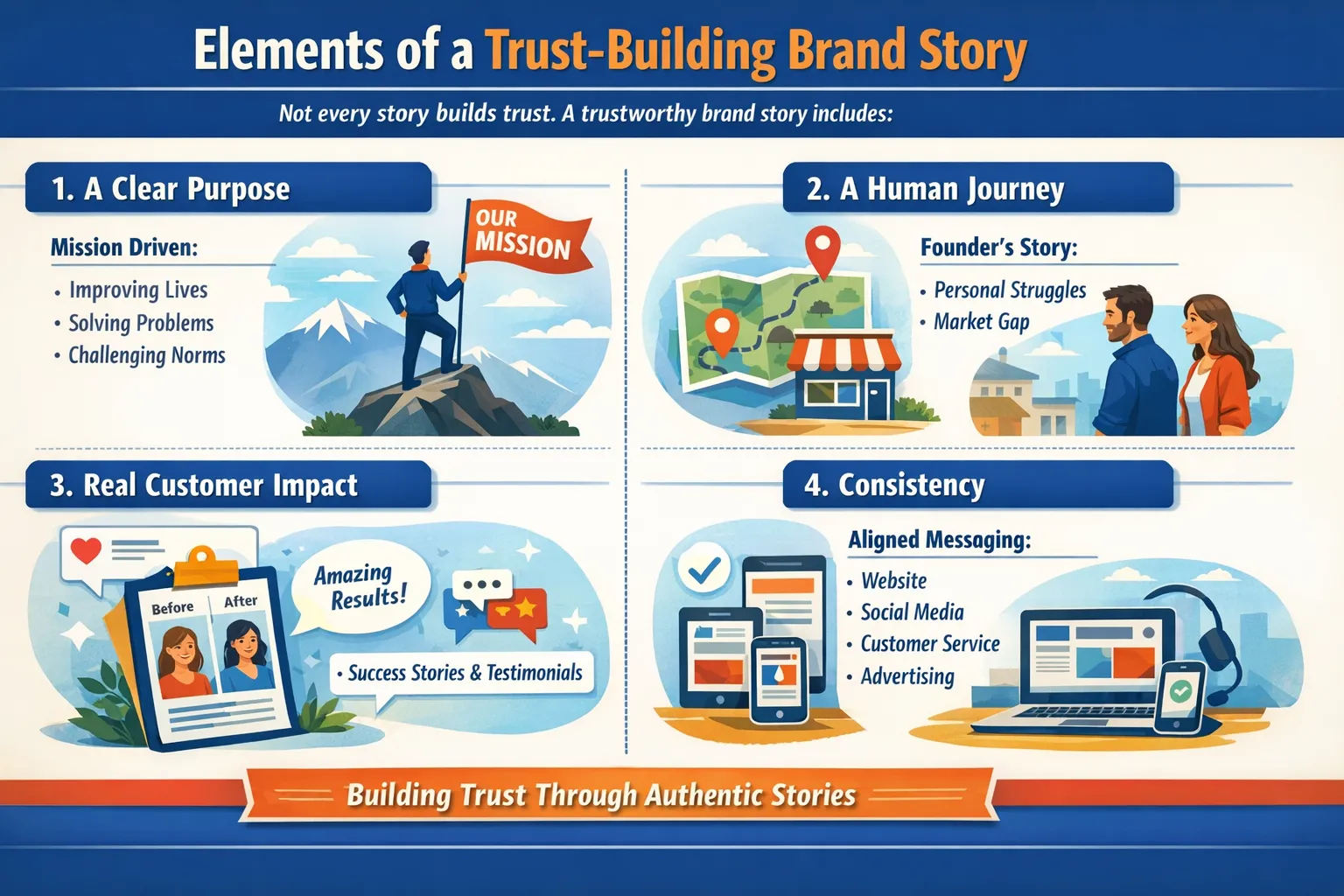
1. A Clear Purpose
Customers want to know why a brand exists beyond making profits.
Purpose-driven brands communicate their mission clearly. It may involve improving lives, solving a specific problem, or challenging industry norms.
When customers understand the purpose, they feel more confident supporting the brand.
2. A Human Journey
Every brand begins somewhere. Sharing the origin story makes the business feel real.
It could be:
- A founder’s personal experience
- A problem they struggled with
- A gap they noticed in the market
These stories reveal motivation and authenticity.
3. Real Customer Impact
Stories become powerful when they demonstrate real results.
Instead of saying “our product is effective,” brands can show how customers benefited from it.
Case studies, testimonials, and transformation stories strengthen credibility.
4. Consistency
Trust grows when the story remains consistent across all platforms.
Whether someone interacts with the brand through:
- Website
- Social media
- Customer service
- Advertising
The core message should remain aligned.
Consistency reinforces reliability.
How to Build Trust Through Brand Storytelling
Now let’s look at practical ways businesses can use storytelling effectively.
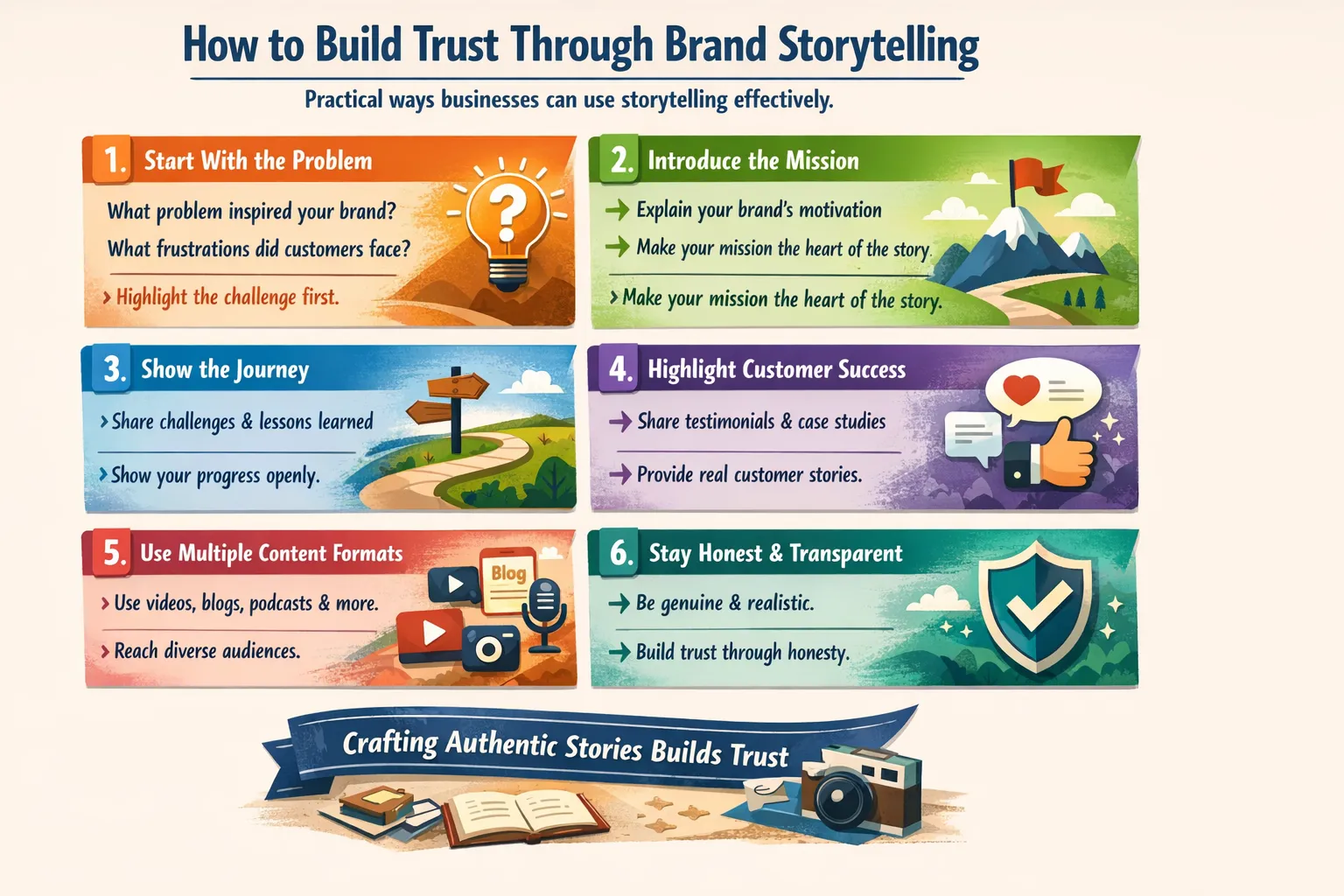
1. Start With the Problem
Every meaningful story begins with a challenge.
Ask yourself:
- What problem inspired the creation of your brand?
- What frustrations did customers face before your solution existed?
By highlighting the problem first, customers understand the relevance of your brand.
2. Introduce the Mission
Once the problem is clear, explain what motivated the brand to solve it.
Your mission becomes the emotional center of the story.
People support brands whose mission aligns with their own beliefs or values.
3. Show the Journey
No journey is perfect.
Brands that openly share their learning process often appear more authentic.
Discuss:
- Early challenges
- Lessons learned
- Improvements made along the way
This transparency strengthens credibility.
4. Highlight Customer Success
Customers trust other customers more than marketing messages.
Sharing real experiences demonstrates that the brand delivers genuine value.
Examples include:
- Customer testimonials
- Before-and-after results
- Case studies
- User-generated content
These stories act as proof.
5. Use Multiple Content Formats
Brand stories can be communicated through different formats:
- Blog articles
- Videos
- Social media posts
- Podcasts
- Case studies
- Founder interviews
Different formats reach different audiences.
Video storytelling, in particular, has become a highly effective content strategy because it combines emotion, visuals, and narrative.
6. Stay Honest and Transparent
Exaggerated claims often damage trust.
Authentic storytelling avoids unrealistic promises and focuses on real experiences.
Customers respect honesty, even when a brand acknowledges challenges.
Transparency signals confidence.
Examples of Powerful Brand Storytelling
Many globally recognized brands have built trust through storytelling.
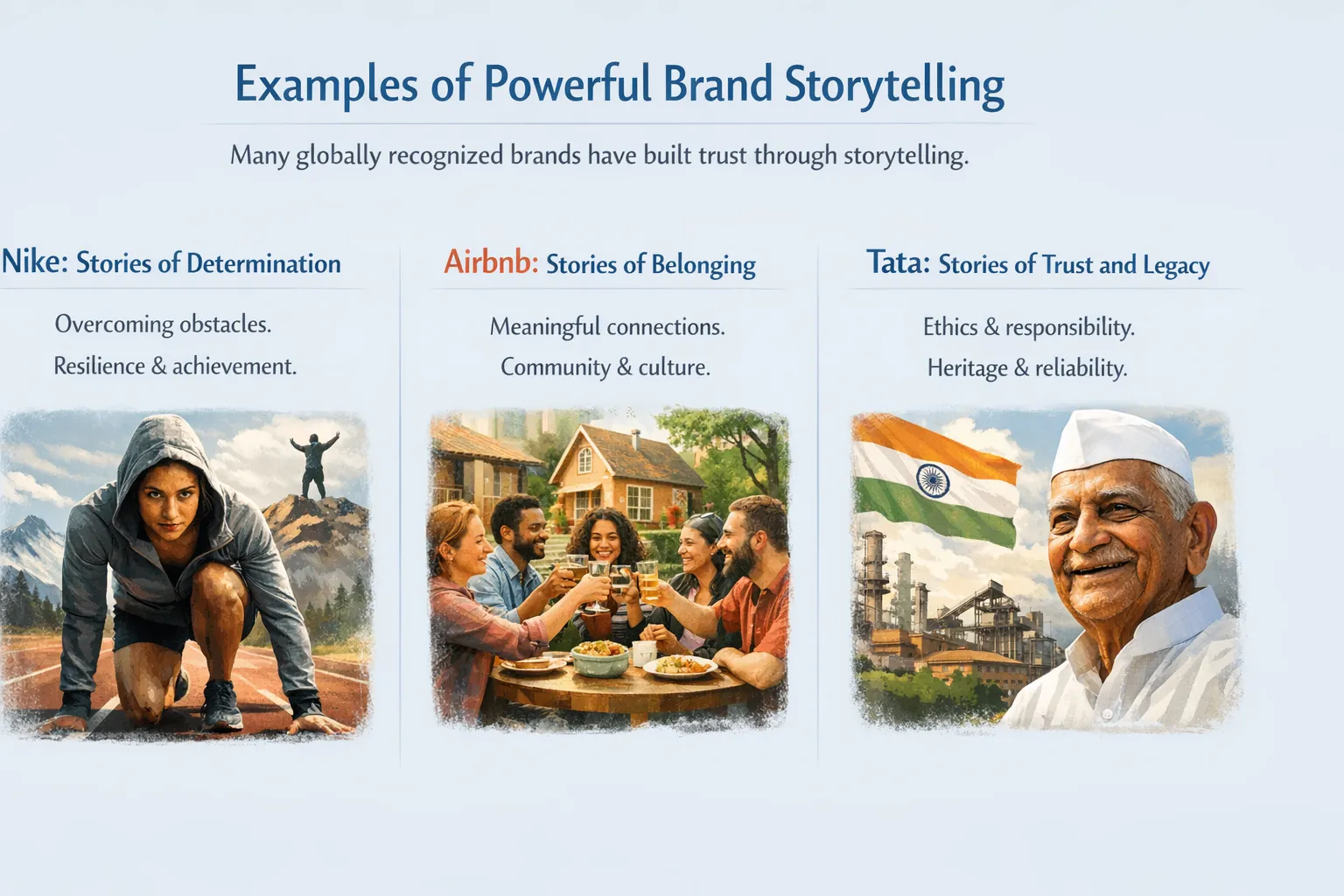
Nike: Stories of Determination
Nike rarely focuses on product specifications.
Instead, their campaigns highlight stories of athletes overcoming obstacles.
These narratives emphasize determination, resilience, and personal achievement.
The product becomes part of the story rather than the center of it.
Airbnb: Stories of Belonging
Airbnb built its brand around real travel experiences.
Their storytelling showcases hosts and travelers forming meaningful connections across cultures.
This approach transforms the service from accommodation booking into a community experience.
Tata: Stories of Trust and Legacy
In India, the Tata Group built its reputation through decades of stories around ethics, responsibility, and nation-building.
Customers associate the brand with reliability because the narrative consistently reflects values rather than short-term marketing.
Common Mistakes in Brand Storytelling
While storytelling is powerful, several mistakes can weaken its impact.

Being Too Promotional
Stories that focus only on selling often lose authenticity.
Customers can quickly recognize marketing disguised as storytelling.
Ignoring the Audience
A story must resonate with the target audience.
If the narrative focuses only on the brand and ignores customer needs, it becomes less engaging.
Lack of Authenticity
Fabricated or exaggerated stories damage credibility.
Authenticity is essential.
Inconsistency
If the story changes frequently across platforms, customers may feel confused.
Consistency builds reliability.
The Long-Term Impact of Brand Storytelling
Brand storytelling is not a short-term marketing tactic.
It shapes how people perceive the brand over time.
Strong storytelling can lead to:
- Higher customer loyalty
- Stronger emotional connection
- Increased brand advocacy
- Better customer retention
When customers believe in the story behind a brand, they are more likely to support it for years.
In many cases, the story becomes more memorable than the product itself.
Conclusion
Trust cannot be built through advertising alone.
It grows through consistent communication, authenticity, and meaningful relationships with customers.
Brand storytelling provides a powerful way to achieve this.
By sharing purpose, highlighting real experiences, and communicating transparently, businesses can create narratives that resonate deeply with their audience.
When done correctly, storytelling transforms a brand from a product provider into a trusted companion in the customer’s journey.
And in a world where customers have endless choices, trust often becomes the deciding factor.
FAQs
What is brand storytelling in marketing?
Brand storytelling is a marketing approach that communicates a brand’s mission, values, journey, and customer impact through narratives that emotionally connect with the audience.
Why is storytelling important for building brand trust?
Stories humanize brands. They help customers understand the purpose behind a business, making the brand appear more authentic and trustworthy.
What are the key elements of a strong brand story?
A strong brand story usually includes a clear purpose, a relatable problem, a meaningful journey, and real customer outcomes.
Can small businesses use brand storytelling effectively?
Yes. In fact, small businesses often have compelling origin stories and personal journeys that can resonate strongly with customers.
Which platforms are best for brand storytelling?
Brands can share stories through blogs, YouTube videos, social media posts, podcasts, case studies, and email newsletters.