

If your business is struggling to stand out, it’s rarely a product problem. It’s a messaging problem.
Most small businesses talk about what they do. Very few clearly communicate why it matters to the customer. That gap is where you lose attention, trust, and ultimately, sales.
Here’s what matters: a strong brand messaging framework helps you say the right thing, to the right people, in a way that makes them care.
Let’s break it down in a way you can actually use.
Why Brand Messaging Is More Important Than Ever
We’re in a noisy market. Customers scroll fast, skip ads, and ignore anything that feels generic.
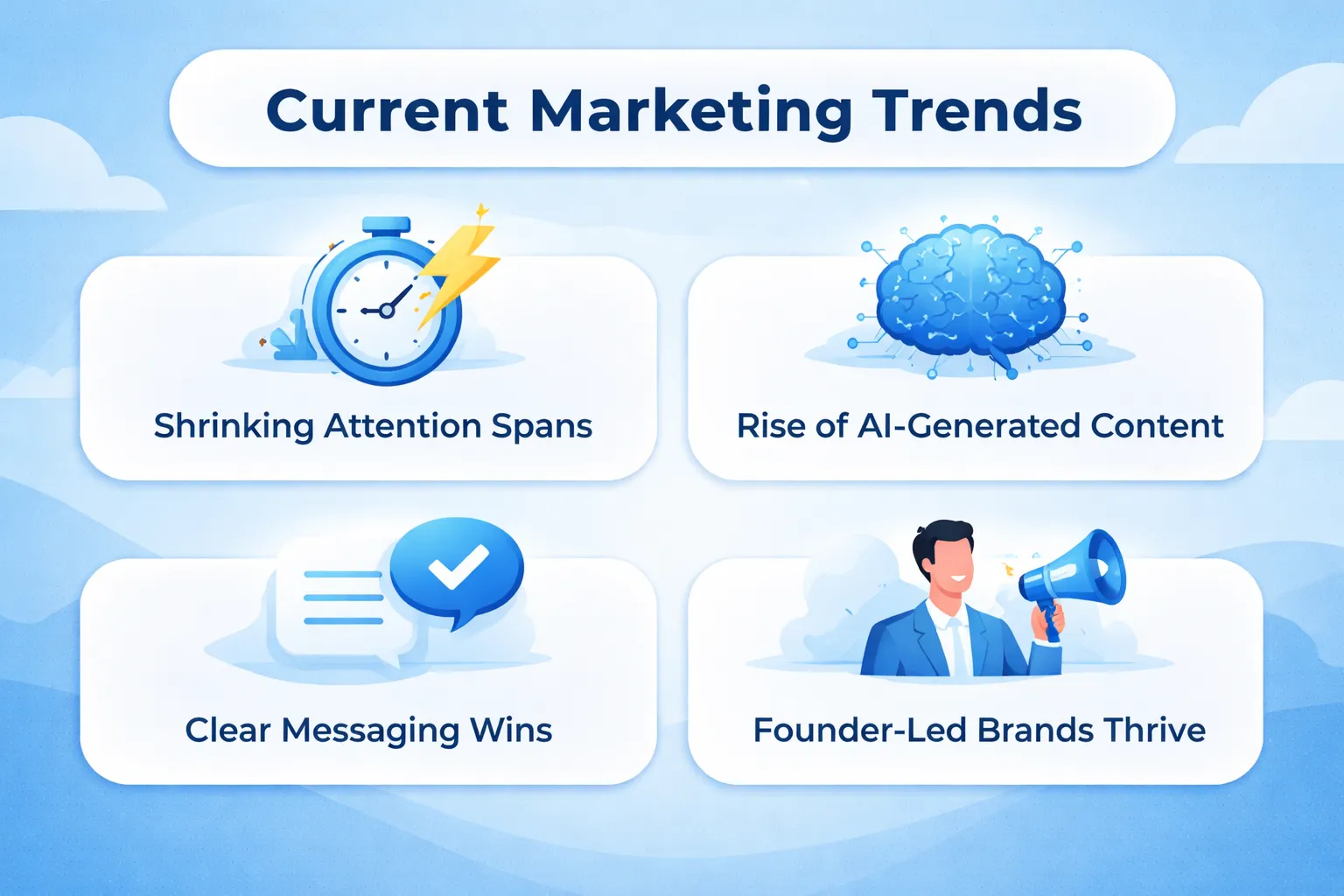
Recent marketing trends show:
- Attention spans are shrinking across platforms
- Customers trust clear and relatable messaging over polished branding
- Founder-led and story-driven brands are outperforming traditional ads
- AI-generated content is increasing, but human clarity still wins
Bottom line: if your message is unclear, you don’t exist in the customer’s mind.
What Is a Brand Messaging Framework?
A brand messaging framework is your communication blueprint.
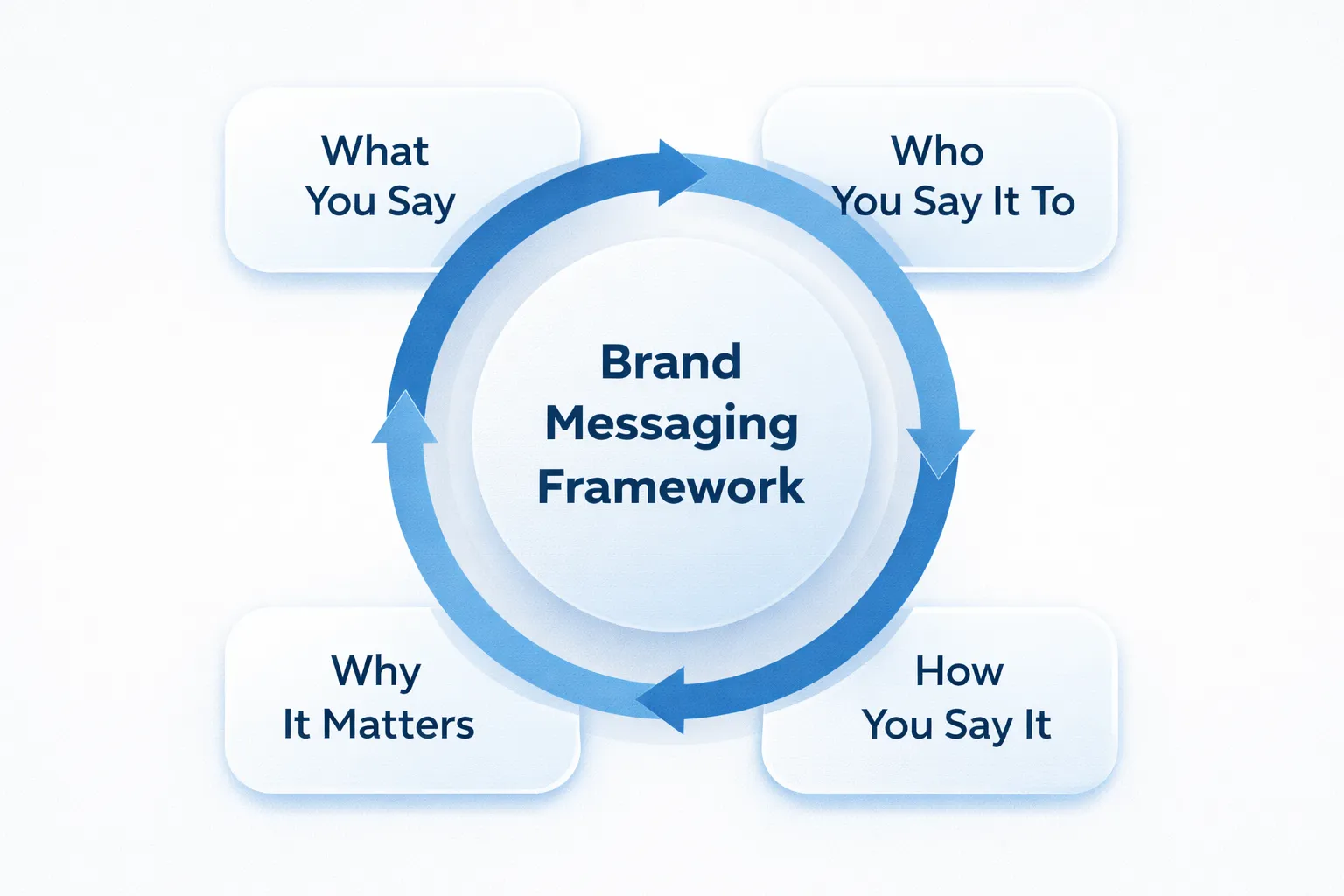
It defines:
- What you say
- Who do you say it to
- How you say it
- Why it matters
Think of it as the backbone of all your marketing—website, ads, social media, sales pitches—everything flows from this.
Without it, your messaging becomes inconsistent and forgettable.
The 6 Core Elements of a Strong Brand Messaging Framework
Let me walk you through the structure that actually works for small businesses.
1. Target Audience Clarity
If you try to talk to everyone, you end up connecting with no one.
Get specific:
- Who is your ideal customer?
- What are their biggest frustrations?
- What are they actively searching for?
Example:
Instead of “small business owners,” say:
“Clinic owners struggling to get consistent patient leads.”
Clarity here sharpens everything else.
2. Problem Statement
Your brand exists to solve a problem. If you can’t clearly state it, your customer won’t feel understood.
Frame it like this:
- What is the core pain point?
- Why is it frustrating or costly?
Example:
“Most small businesses invest in marketing but don’t see consistent results because there’s no clear strategy behind it.”
That instantly resonates.
3. Value Proposition
This is where you answer the big question: Why should someone choose you?
A strong value proposition is:
- Clear
- Specific
- Outcome-focused
Formula:
We help [target audience] achieve [desired outcome] without [common pain point].
Example:
“We help local businesses generate consistent leads without wasting money on random marketing tactics.”
4. Brand Positioning
Positioning is how you want to be perceived in the market.
Ask yourself:
- Are you premium or affordable?
- Specialist or generalist?
- Strategy-first or execution-focused?
Trend Insight:
Today, specialists win over generalists. Niche positioning builds trust faster.
5. Brand Voice and Tone
This defines how your brand sounds.
For small businesses, conversational and clear beats corporate language every time.
Decide:
- Are you friendly or authoritative?
- Simple or technical?
- Direct or storytelling-driven?
Consistency here builds familiarity, and many business owners struggle to get it right.
6. Key Messaging Pillars
These are 3–5 core themes you’ll repeatedly communicate.
They should reflect:
- Your expertise
- Your differentiation
- Your customer priorities
Example pillars:
- Strategy over random marketing
- Consistent lead generation
- Practical, no-fluff execution
These pillars guide your content, ads, and communication.
How to Build Your Brand Messaging Step-by-Step
Let’s make this actionable.
Step 1: Write a One-Line Brand Message
Start simple.
If you can’t explain your business in one clear line, nothing else will work.
Step 2: Align Messaging Across Platforms
Your website, Instagram, LinkedIn, and ads should all say the same core message.
Different format, same idea.
Step 3: Focus on Customer Language
Stop using internal jargon.
Use the exact words your customers use:
- “Not getting leads.”
- “Marketing not working.”
- “Low footfall”
That’s what connects.
Step 4: Test and Refine
Messaging is not static.
Track:
- Which posts get engagement
- Which ads convert
- Which headlines attract clicks
Then refine based on real data.
Common Mistakes Small Businesses Make
Let me be direct—these are the traps you want to avoid:
- Talking about services instead of outcomes
- Using vague words like “innovative” or “best quality.”
- Trying to copy big brands
- Changing messaging too frequently
- Ignoring customer pain points
The biggest mistake? Lack of clarity.
Real-World Shift: What’s Working Today
Here’s what’s actually working right now:
- Founder-led messaging: People trust people, not logos
- Educational content: Teaching builds authority
- Simple positioning: Clear beats clever
- Consistency over creativity: Repetition builds recall
If your messaging is clear, even simple content performs.
Conclusion
A strong brand messaging framework is not a luxury. It’s a necessity.
It helps you:
- Stand out in a crowded market
- Connect with the right audience
- Convert attention into business
You don’t need a big budget. You need clarity.
Get your message right, and everything else – content, ads, sales – starts working better.
FAQs
1. What is the difference between branding and brand messaging?
Branding includes visuals like logo, colors, and design. Brand messaging is about what you communicate, your words, positioning, and value.
2. How often should I update my brand messaging?
Only when your market, audience, or offering changes significantly. Otherwise, consistency is more important than frequent changes.
3. Can small businesses build strong messaging without agencies?
Absolutely. In fact, many small businesses do better because they are closer to their customers and understand their problems deeply.
4. How long does it take to create a messaging framework?
You can build a basic framework in a few hours, but refining it based on market response is an ongoing process.
5. What is the most important element in brand messaging?
Customer clarity. If you deeply understand your audience, everything else becomes easier.